
Bringing home a new puppy means you’ve got about 72 critical hours to establish routines, puppy-proof your space, and set the foundation for a well-adjusted dog. The first three days shape everything from house training success to how securely your puppy bonds with you, and most behavior challenges we see months later trace back to missteps during this narrow window.
Here’s what actually matters: your puppy needs a consistent sleep spot, a feeding schedule locked in from day one, and immediate (but gentle) introduction to the concept that outside is for potty breaks. You’ll also need the right supplies before your puppy walks through the door, because scrambling to buy a crate or enzymatic cleaner on day two means you’ve already lost momentum.
At Lincoln Pet Volunteers, we’ve guided hundreds of foster families through those crucial first weeks, and we’ve watched the same patterns unfold. Puppies whose families prepared properly adjusted faster, cried less at night, and started house training on a smoother trajectory. The families who winged it? They felt overwhelmed, second-guessed every decision, and often called us in a panic by day three.
Whether you’re completing the adoption process or picking up a puppy from a breeder, this guide walks you through exactly what to do before, during, and after your puppy arrives. You’ll learn which supplies truly matter (and which are marketing gimmicks), how to structure the first week, and how to troubleshoot the most common challenges without losing your mind.
What You’ll Need Before Your Puppy Comes Home
Before you bring your new furry family member home, setting up the right supplies makes those first chaotic days smoother and safer. You don’t need to buy everything the pet store offers, but having the essentials ready means you can focus on bonding rather than emergency shopping trips. Here’s what actually matters when you find a puppy and prepare to welcome them home.
Start with the basics organized by what your puppy needs most:
- Feeding supplies: Two stainless steel bowls (one for food, one for water), puppy-specific food recommended by your rescue or breeder, and airtight storage for kibble
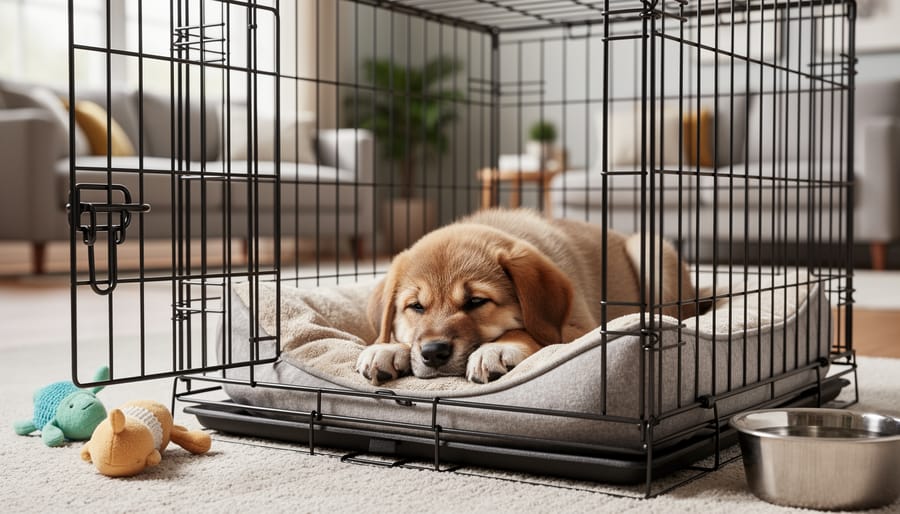
- Sleeping area: A crate sized for your puppy’s adult weight with a divider to adjust space as they grow, plus washable bedding or crate pads
- Safety items: Baby gates to block stairs and restrict access, cabinet locks for under-sink areas, and a secure ID collar with your phone number
- Training tools: A 6-foot leash, soft treats cut into pea-sized pieces, enzymatic cleaner for accidents, and poop bags
- Grooming basics: Puppy-safe shampoo, nail clippers or a grinder, and a soft brush appropriate for your puppy’s coat type
- Identification: A collar that fits with room for two fingers underneath, ID tags, and consider microchipping arrangements with your vet
The crate deserves special attention because it becomes your puppy’s den and your house training ally. Choose one that will fit your puppy at full adult size, then use the divider to create a cozy space just big enough for them to stand, turn around, and lie down now. Too much room encourages them to potty in one corner and sleep in another, which defeats the purpose.
You can absolutely save money by skipping fancy dog beds initially since puppies often chew and have accidents on them. Old towels work perfectly and wash easily. The same goes for toys: start with two or three durable options like a rubber Kong, a rope toy, and a soft squeaky toy, then see what your puppy actually enjoys before investing in more.
What can wait? Elaborate grooming tools, a huge toy collection, dog clothing, and specialty furniture. Your puppy needs safety, routine, and your presence far more than accessories. Focus your budget on quality food, a sturdy crate, and having an emergency vet fund ready instead.
Safety First: Puppy-Proofing Your Home
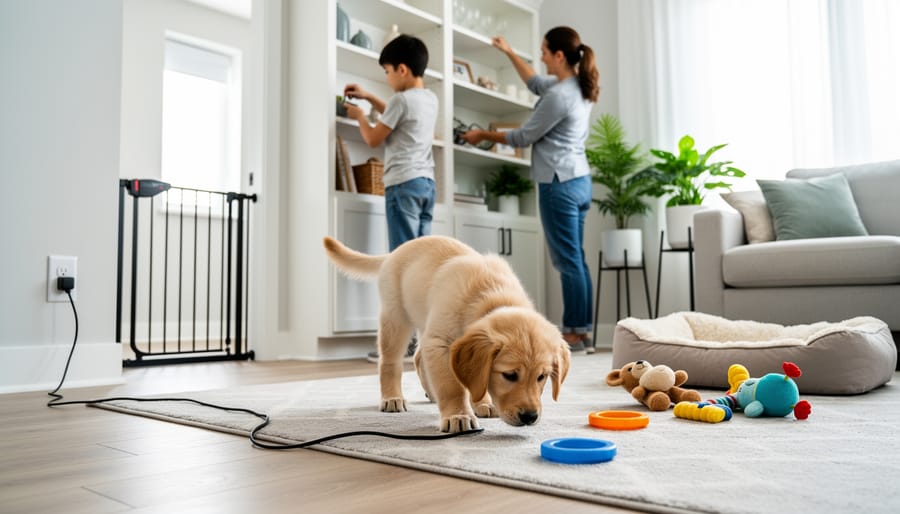
Your puppy views the world as one giant chew toy, and that curiosity can turn dangerous fast. Before bringing your new puppy home, walk through each room at ground level, literally get down on your hands and knees, to spot hazards you’d miss from standing height.
Start in the kitchen, where the most serious threats hide. Chocolate, grapes, raisins, onions, garlic, xylitol (found in sugar-free gum and peanut butter), and macadamia nuts can all cause severe illness or death in puppies. Keep trash cans behind closed cabinet doors, and never leave food unattended on counters or tables. Store medications, including over-the-counter pain relievers like ibuprofen and acetaminophen, in high cabinets; a single pill can be fatal to a small puppy.
Electrical cords present both shock and chewing hazards. Tape cords to baseboards, hide them behind furniture, or use cord protectors. Unplug appliances when not in use, and keep charging cables out of reach. In the living room, secure or remove anything small enough to swallow: coins, rubber bands, hair ties, children’s toys, and batteries all require emergency surgery if ingested.
Check every room for escape routes. Puppies squeeze through surprisingly small gaps in fences, dart through open doors, and slip past legs. Install baby gates to restrict access to stairs and certain rooms. Inspect your yard’s fence line for holes or weak spots, and ensure gates latch securely.
Remove or elevate toxic houseplants like lilies, philodendrons, pothos, sago palms, and azaleas. Common garage items, antifreeze, rat poison, fertilizers, and pesticides, must be stored on high shelves in sealed containers. Even small amounts of antifreeze taste sweet to puppies but cause kidney failure.
Finally, secure bathroom cabinets containing cleaning products, and keep toilet lids down to prevent drowning or chemical ingestion. Your puppy relies entirely on you to eliminate these dangers before they become emergencies.
The First 24 Hours: Helping Your Puppy Settle In
The car ride home sets the tone for everything that follows. Have someone hold your puppy in their lap with a towel (accidents happen) or secure them in a small crate. Keep the radio low and the car calm, no grand welcome party waiting at home. Your puppy just left everything familiar, and the goal now is gentle transition, not excitement.
When you arrive, carry your puppy directly to the designated potty spot before entering your home. Wait patiently, even if it takes ten minutes. When they go, praise quietly and calmly. This single action establishes the routine that will make house training easier.
Once inside, introduce only one puppy-proofed room or pen area initially. Too much space overwhelms and makes accidents more likely. Put down fresh water and let your puppy explore at their own pace. Don’t force interaction with other pets yet, those introductions need careful staging over the next few days.
- First hour: Let your puppy sniff and explore the designated area. Sit on the floor and let them come to you. Offer a few pieces of kibble by hand to build positive association.
- First feeding (2-3 hours after arrival): Serve the same food your puppy ate at the shelter or breeder. Place the bowl in a quiet spot and give them space to eat without hovering.
- Potty breaks every 1-2 hours: Take your puppy out after eating, drinking, playing, and waking from naps. Always use the same door and the same outdoor spot.
- First night preparation (around bedtime): One last potty trip, then place your puppy in their crate or sleeping area with a worn t-shirt that smells like you.
The crying will likely start once the lights go out. This is normal, your puppy misses their littermates and everything feels strange. Placing the crate beside your bed helps, as does a ticking clock or white noise machine. Many rescue foster care providers recommend a covered crate to create a den feeling.
If crying continues past fifteen minutes, take your puppy out for a quick, boring potty break with no play or prolonged interaction, then back to the crate. Comfort without rewarding the crying. Most puppies settle within three to five nights once they learn the routine.
Expect your puppy to sleep in short bursts. Young puppies need a nighttime potty trip or two. Set an alarm rather than waiting for desperate crying, preventing accidents builds faster habits than cleaning them up.
Building a Foundation: House Training and Basic Routines
Creating a Daily Schedule That Works
A predictable daily schedule gives your puppy the structure they need while helping you stay ahead of accidents and meltdowns. Young puppies thrive on repetition, and a consistent rhythm teaches them when to expect food, play, rest, and potty breaks.
For puppies 8-12 weeks old, plan on feeding three to four times daily, with potty trips every 1-2 hours while awake. A typical day might look like: wake at 7am (immediate potty break), breakfast at 7:15am, potty at 7:30am, short play session, nap by 9am. Repeat this eat-potty-play-nap cycle throughout the day, with the last meal around 6pm and final potty trip at 10pm. Puppies this age sleep 18-20 hours, so don’t skip those frequent naps.
At 3-4 months, you can stretch to three meals and potty breaks every 2-3 hours. Wake at 7am, breakfast, potty, play until 8:30am, then crate time while you shower. Mid-morning play and training (5-10 minutes), lunch around noon, afternoon nap, evening meal at 5pm, playtime before bed.
By 5-6 months, most puppies handle two meals and can wait 3-4 hours between potty breaks during the day. Nighttime bladder control improves significantly.
The key is flexibility within structure. If you work, cluster active play and training before and after your absence. Adjust mealtimes to fit your schedule, but keep them consistent day to day. Your puppy will adapt to your rhythm as long as their basic needs for food, elimination, activity, and rest are met on a predictable pattern.
Socialization and Early Training: The Critical Window
Your puppy’s brain is most receptive to new experiences between 8 and 16 weeks of age, making this the single most important window for socialization. What your puppy encounters during these weeks shapes how they’ll respond to the world for the rest of their life. A well-socialized puppy grows into a confident, adaptable dog who takes new situations in stride. Missing this window can lead to fearfulness, reactivity, and behavioral challenges that are much harder to address later.
The catch? This critical period overlaps with the vaccination schedule, meaning your puppy isn’t fully protected from diseases yet. You can’t keep them in a bubble, but you do need to socialize smartly. Avoid areas where unvaccinated dogs congregate, dog parks, pet stores, and sidewalks in high-traffic dog areas. Instead, invite vaccinated, friendly dogs to your home for play dates. Carry your puppy in busy public spaces so they experience sights and sounds without paw-to-ground contact. Let them watch the world from your car in a parking lot. These controlled exposures build confidence without unnecessary risk.
Focus on positive, pressure-free experiences across different categories:
- People variety: babies, children, teenagers, elderly people, people in hats, sunglasses, uniforms, wheelchairs, using canes or walkers
- Sounds: vacuum cleaners, doorbell, washing machine, traffic noise, thunder recordings (at low volume), children playing
- Surfaces: grass, gravel, tile, carpet, wood floors, metal grates, stairs
- Environments: car rides, your veterinarian’s office (just for treats and weighing, not only for shots), outdoor cafes from a distance, quiet trails
- Handling: touching paws, ears, mouth, brushing, nail trimming practice, gentle restraint for vet exams
Keep each session short and watch your puppy’s body language. Relaxed ears, wagging tail, and curiosity signal they’re comfortable. Tucked tail, pinned ears, or trying to hide means you’re pushing too hard. Never force a scared puppy to interact. Instead, create distance and let them observe from where they feel safe, rewarding any calm behavior with treats.
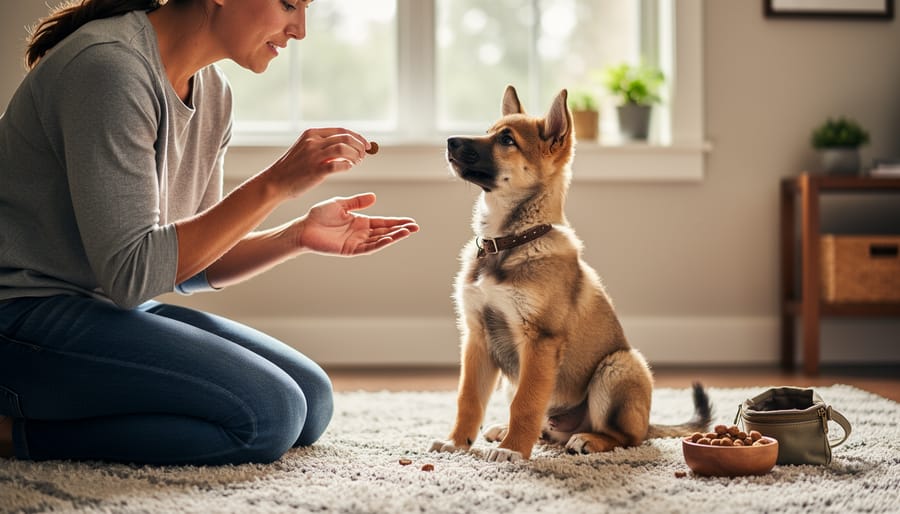
Alongside socialization, start teaching basic commands using positive reinforcement. “Sit” is easiest: hold a treat above your puppy’s nose and move it back over their head; their rear naturally drops. Say “sit” as it happens, then reward immediately. Practice “come” by saying the word enthusiastically when your puppy is already moving toward you, then throw a treat party when they arrive. “Leave it” prevents them from grabbing dangerous items: show a treat in your closed fist, wait for them to stop pawing at it, then reward from your other hand.
Bite inhibition matters just as much as commands. Puppies explore with their mouths, but those needle teeth hurt. When play gets too rough, let out a high-pitched “ouch!” and immediately stop interacting for 10-15 seconds. This mimics how littermates communicate boundaries. If your puppy bites during play, redirect to an appropriate chew toy rather than your hands. Consistency from everyone in your household teaches that gentle mouths get playtime; hard bites end the fun.
Health and Veterinary Care in the First Months
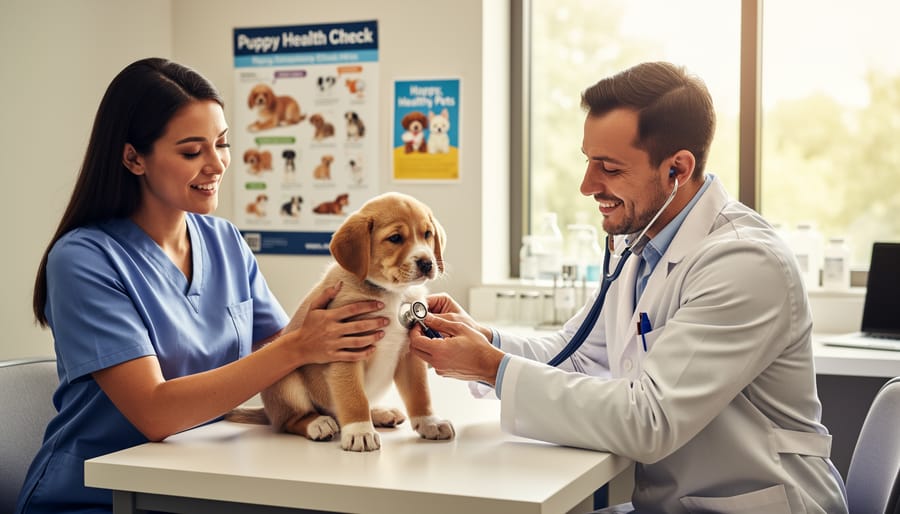
Your puppy’s first vet visit should happen within 48 hours of bringing them home, even if the breeder or rescue provided initial care. This appointment establishes a baseline for your puppy’s health and gives you a chance to ask questions about their specific needs. The vet will perform a thorough physical exam, check for parasites, discuss the puppy vaccination schedule and review your puppy’s medical history. Come prepared with questions about diet, behavior concerns, and any health records you received.
Vaccinations typically begin at 6-8 weeks and continue every 3-4 weeks until your puppy reaches 16 weeks old. The core vaccines protect against distemper, parvovirus, hepatitis, and rabies. Your vet will create a customized schedule based on your puppy’s age, risk factors, and local requirements. Don’t skip appointments, incomplete vaccination leaves puppies vulnerable to serious diseases.
Deworming usually starts at 2 weeks of age and continues every 2-3 weeks until 12 weeks, then shifts to a monthly preventive that also covers heartworm, fleas, and ticks. Many puppies arrive home with intestinal parasites from their mother or littermates, so don’t panic if the first fecal test comes back positive. Follow your vet’s treatment plan and maintain good hygiene.
Keep a health binder with vaccination records, deworming dates, weight tracking, and notes from each vet visit. You’ll need these records for boarding, training classes, and if you move or change vets. Take photos of official documents as backup.
Common first-month concerns include soft stool from diet changes, mild kennel cough if your puppy came from a shelter, and occasional vomiting from eating too fast. Most resolve quickly, but call your vet if symptoms persist beyond a day or worsen. Spay and neuter timing varies by breed size, discuss the best window with your vet, typically between 6-12 months for most puppies.
Verifying Your Puppy Is Thriving: What Success Looks Like
Wondering if you’re doing everything right? Here’s what a thriving puppy actually looks like.
Physical Health Indicators
A healthy puppy should have bright, clear eyes without discharge and a shiny coat that isn’t flaky or excessively oily. Their nose might be wet or dry, both are normal, but watch for persistent nasal discharge. Your pup should gain weight steadily; most breeds gain around two to four pounds per month in early puppyhood, though small breeds gain less and giant breeds more. You should be able to feel their ribs with light pressure but not see them prominently. Energy levels vary by breed, but your puppy should have predictable bursts of playfulness followed by deep sleep, usually sleeping 15-20 hours daily at eight to twelve weeks.
Behavioral and Emotional Milestones
By ten to twelve weeks, your puppy should recognize their name and turn toward you when called. Healthy curiosity is key, they should investigate new objects, sniff visitors, and explore their environment, though some wariness of new things is normal. During play, they should show enthusiasm but also settle when tired, not seem frantic or unable to calm down.
Emotionally, a well-adjusted puppy seeks you out for comfort when startled and recovers quickly from minor scares within a few minutes. They should show increasing confidence in familiar spaces and willingness to try new experiences with your encouragement.
If your puppy seems lethargic for more than a day, refuses multiple meals, shows persistent fearfulness, or isn’t meeting these milestones by sixteen weeks, contact your vet or a qualified trainer for guidance.
Common New Puppy Challenges and Solutions
If your puppy seems to think your hands are chew toys, you’re experiencing the most common puppy complaint we hear from new foster families. The good news? These challenges are temporary, developmentally normal, and manageable with the right approach.
Biting and mouthing peaks between 8-16 weeks as puppies explore their world through their mouths and lose their baby teeth. When those needle-sharp teeth contact your skin, yelp sharply and immediately stop playing. Redirect to an appropriate chew toy, and praise calmly when your puppy takes it. Consistency matters more than any single correction. If yelping gets your puppy more excited, simply stand up, cross your arms, and ignore them for 10-20 seconds. When they calm down, resume gentle play. Never use physical punishment, which can damage trust and increase anxiety-driven biting.
Nighttime crying tests every new puppy parent’s resolve. Your puppy isn’t being difficult; they’re genuinely scared after being separated from their littermates for the first time. Place the crate in your bedroom so your puppy can hear and smell you. A covered crate with a warm (not hot) water bottle wrapped in a towel and a ticking clock can mimic littermate comfort. Expect to take young puppies out once during the night for a quick, boring potty break with no playtime. The crying typically improves dramatically within three to five nights as your puppy learns the routine is predictable and you always return.
How do I stop my puppy from jumping on everyone?
Ignore jumping completely by turning your back and folding your arms until all four paws are on the floor, then give calm attention and praise. Ask visitors to follow the same rule, since inconsistency confuses puppies about what behaviour earns attention.
My puppy pulls constantly on the leash. What should I do?
Stop moving the instant the leash tightens, and only resume walking when your puppy looks back at you or the leash loosens. This teaches that pulling gets them nowhere, while a loose leash gets them where they want to go.
Is it normal for my puppy to suddenly seem scared of everything?
Yes, puppies typically experience fear periods around 8-11 weeks and again around 6-14 months. Don’t force interactions with whatever scares them, but don’t overreact with excessive comfort either, just stay calm and let them observe from a safe distance.
My puppy guards their food bowl. Should I be worried?
Mild resource guarding is common but shouldn’t be ignored. While your puppy eats, periodically drop high-value treats into their bowl so they learn your approach means good things, not competition.
These challenges feel overwhelming in the moment, but they pass faster than you expect with patient, consistent responses. If a behaviour concern persists beyond a few weeks or seems to worsen despite your efforts, reach out to a positive-reinforcement trainer for guidance. Many rescues, including organizations offering volunteer opportunities like fostering or training support, provide resources to help new puppy parents through rough patches. Remember that your puppy isn’t trying to frustrate you; they’re simply learning what works in their new world.
Raising a puppy isn’t a sprint to perfection, it’s a journey you’re taking together. Some days you’ll marvel at how quickly your pup picks up a new command. Other days you’ll wonder if they’ve forgotten everything you’ve taught them. That’s completely normal. Puppies develop at their own pace, and what works for one might not work for another. The key is showing up with patience, staying consistent with your routines, and bringing plenty of love to every interaction.
The bond you’re building right now will shape your relationship for years to come. Those sleepless nights, the cleaned-up accidents, the redirect-the-biting-for-the-hundredth-time moments, they’re all part of the foundation you’re creating. You’re not just teaching your puppy where to potty and how to sit. You’re becoming their safe person, the one they trust and turn to.
You don’t have to figure this out alone. When challenges feel overwhelming or you’re not sure what to try next, reach out for support. Lincoln Pet Volunteers offers training programs and guidance to help you and your pup succeed together. We’ve been there, through the chaos and the breakthroughs, and we’re here to support you.
The puppy phase goes faster than you think. Soon enough, you’ll have a loyal companion who knows your routine, responds to your voice, and greets you like you’re the best thing in their world. Because to them, you are.