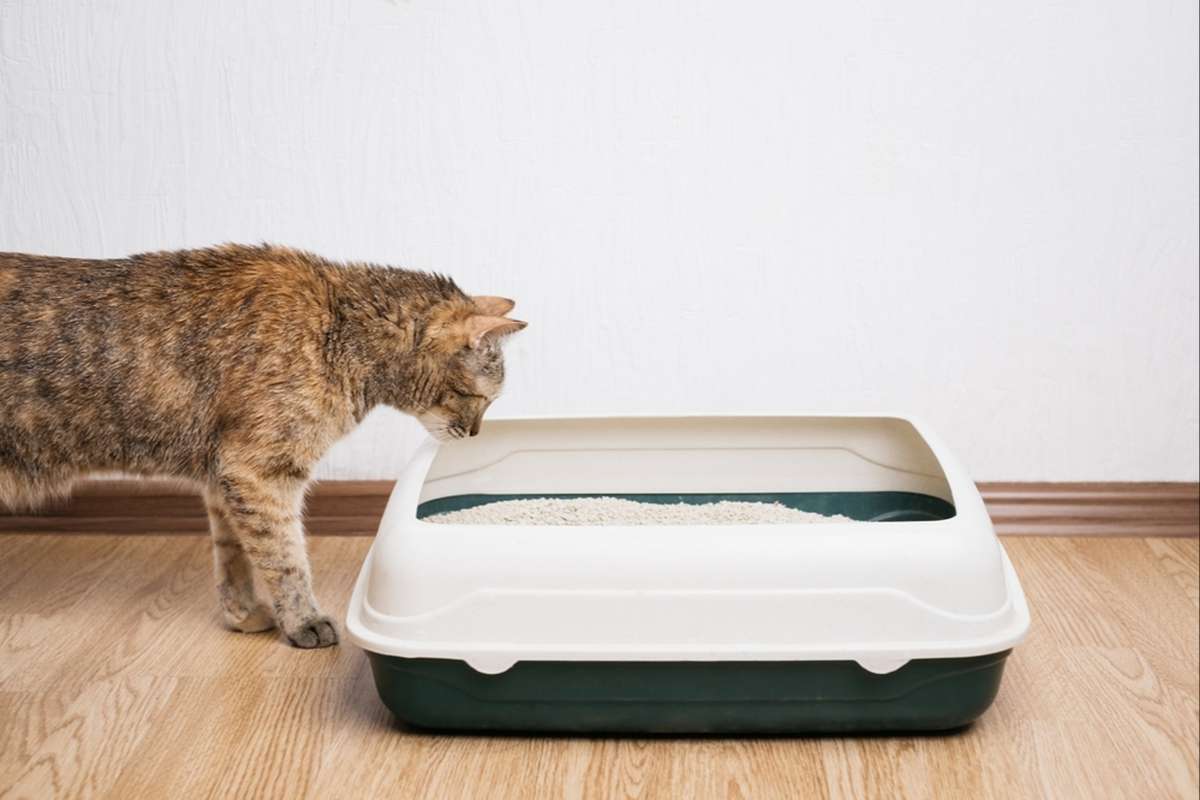
Emptying a cat litter box takes about ten minutes and gets easier with a simple routine: scoop the waste, dump the old litter into a bag, wash the box with mild soap and warm water, dry it completely, then refill with fresh litter. Do the daily scooping and a full change every one to two weeks (clumping litter can often stretch a bit longer), and your home stays fresh while your cat stays comfortable.
If you’re new to cats, this chore can feel a little intimidating. You might worry about the smell, the dust, or getting it wrong. Please don’t. Every cat parent starts somewhere, and nobody gets it perfect the first time.
When we first began fostering kittens, our very first full litter change ended with a trail of litter across the hallway and a very curious fluffy helper sitting in the clean box before we’d even finished. We laughed, swept up, and learned to set out a tray and work slowly.
A clean box is one of the kindest things you can do for a cat. Here’s how to make it quick and mess-free.
Gather Your Supplies: Tools and Materials for a Fresh Start
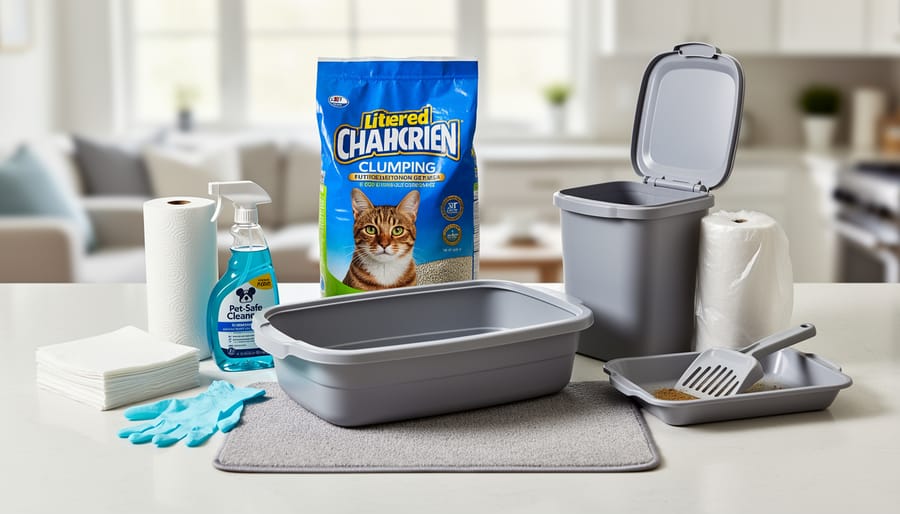
Before you tip out a single scoop, take two minutes to gather everything in one spot. Nothing derails a cleaning faster than discovering halfway through that you’re out of trash bags, with a half-empty box in your hands. A little setup keeps the whole job calm and quick, which is good for you and for your cat.
Here’s what to have within arm’s reach:
- A sturdy litter scoop for lifting out clumps and loose litter
- Disposable gloves to keep your hands clean
- Strong trash bags that won’t tear under the weight of old litter
- Mild, unscented dish soap, since cats have very sensitive noses
- Warm water for rinsing and washing the box
- Paper towels or a dedicated cloth for drying
- Fresh litter, ideally the same kind your cat already likes
- A small mat or old towel to protect the floor from spills
None of this has to be fancy or expensive. You don’t need a special disposal system to do the job well. A sturdy bag works beautifully, and doubling it up gives you extra peace of mind for heavy loads. An old spoon-style kitchen scoop can stand in for a litter scoop in a pinch, and a worn-out bath towel makes a perfect floor mat.
Once everything is laid out, you’re set. The cleaning itself will feel far more manageable when you’re not hunting for supplies mid-task.
Before You Begin: Safety Tips for You and Your Cat
A few simple precautions keep both you and your cat comfortable while you work. None of this is complicated, and it only adds a minute or two to the job.
Start by thinking about the room itself. Open a window or turn on a fan so fresh air can move through, especially if your litter kicks up dust. It also helps to keep your cat in another room while you clean. That way, they stay clear of dust and damp floors, and they won’t dart through a freshly washed box with wet paws.
Cats have a far keener sense of smell than we do, so strong cleaners can bother them more than you’d expect. A box that smells like bleach or heavy perfume may leave a cat hesitant to use it at all. Mild, unscented dish soap and warm water do the job beautifully.
Asking for help is completely okay. Many of our volunteers trade off chores at home, and a little teamwork makes the task lighter for everyone.
Finally, keep an eye on your cat while you’re at it. If you notice changes in the litter box habits of a cat you love, such as straining, going more or less often, or avoiding the box, a call to your vet is a kind and sensible next step. Cats are good at hiding discomfort, so these small clues really matter.
Step-by-Step: How to Empty and Clean the Litter Box
Emptying the Old Litter Safely
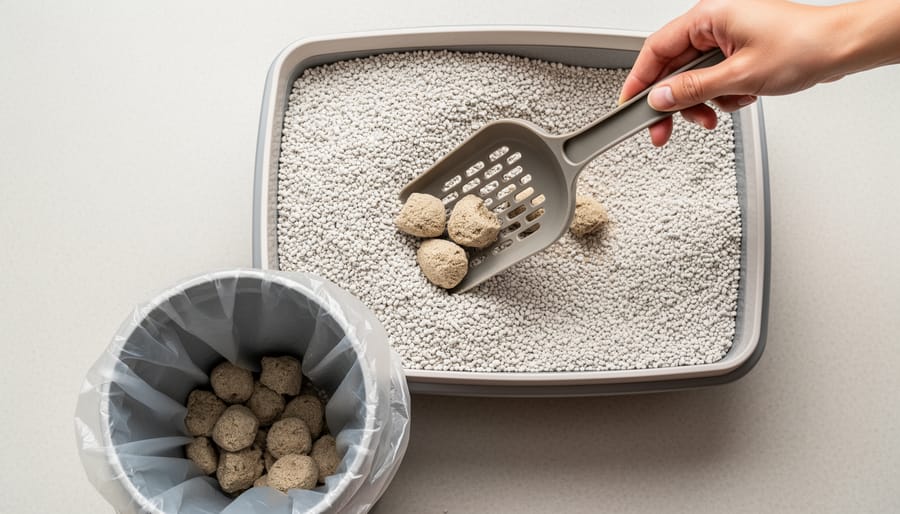
Start by scooping out any solid waste and clumps, then work on the rest of the litter. If your box is light enough, take it outside or set it over a trash bag, and tilt it slowly so the litter slides out instead of billowing up. A large scoop works well for heavier boxes. Pour gently and keep your face turned away to avoid breathing in dust.
Double-bag the litter in a sturdy trash bag, squeeze out the extra air, and knot it tightly so nothing leaks or spills on the way to the bin. If the bag feels heavy, split the litter between two bags so they don’t tear.
Most clumping and clay litters belong in the trash, not the toilet. They can swell and cause stubborn clogs in your pipes. Some natural litters say they’re flushable, but rules vary, so check your local waste guidelines before trying it.
Washing, Drying, and Refilling
Once the old litter is out, give the box a good wash. Mild, unscented dish soap and warm water do the job beautifully. Harsh cleaners, bleach, or anything heavily perfumed can leave a smell that your cat’s sensitive nose finds off-putting, and some cats will simply avoid a box that smells strange. Scrub the corners and any scratched areas where odors like to hide, then rinse until no soapy residue remains.
Next comes the step that’s easy to rush: drying. Wipe the box with a clean towel or let it air-dry completely. Damp plastic makes litter stick to the bottom and clump poorly, and some cats take one look at a soggy box and decide to go elsewhere.
When it’s bone dry, add fresh litter about two to three inches deep. That’s enough for good clumping without wasting a bag.
Making Cat Litterbox Management Part of Your Routine
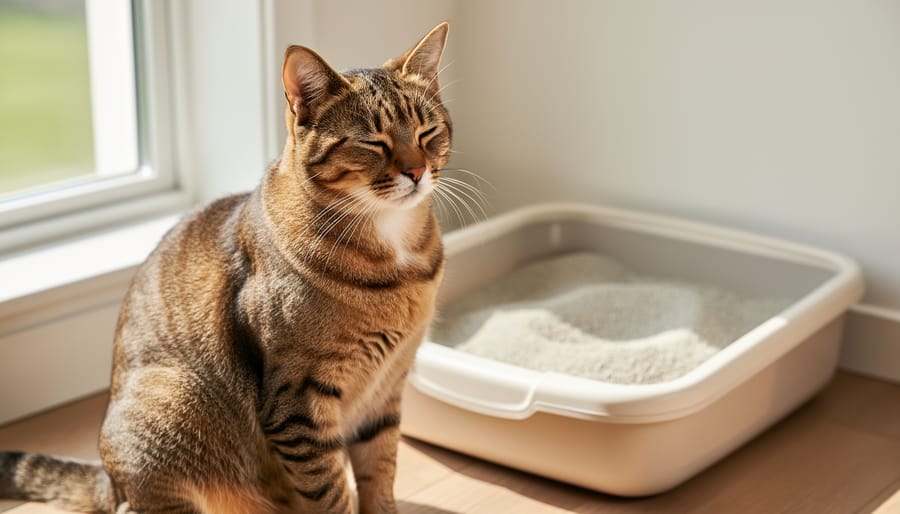
Every household is busy, and that’s okay. The good news is that small, steady habits do more than any big weekend cleaning blitz. Scoop once a day if you can, even if it’s a quick pass while the coffee brews. Then pick a regular day for the full empty and wash. Many people settle into every week or two with clumping litter, and a little more often for non-clumping types, since those hold onto odor faster.
A few easy adjustments keep things working for your home:
– Multi-cat homes: more cats means more mess, so plan on an extra scoop each day and a more frequent full change. A common rule of thumb is one box per cat, plus one extra.
– Different litters: a lightweight or crystal litter may need a different schedule than heavy clay, so watch your nose and your cat’s habits and adjust from there.
Routine matters most to cats who are still finding their footing. Our foster volunteers notice it right away. A shy newcomer who arrives nervous often starts to relax once the box is clean in the same quiet spot every morning, because predictable care tells a cat that this new place is safe. That’s one reason temporary fostering can make such a difference for cats in transition.
How to Tell Your Cleaning Worked (and What to Try Next)
You’ll know the cleaning worked when the whole space feels fresh and your cat treats it like home again. Start with your nose. A clean box shouldn’t smell like much of anything. If a sour or ammonia scent hangs around after you’ve washed and refilled, take another look at your routine, and our guide to controlling cat litter odor has simple steps to help. Next, check that the box is completely dry and free of residue or soap film. Finally, watch your cat. If they hop in and go about their business happily, you’re all set.
If your cat seems hesitant, don’t worry. It happens, and it’s usually an easy fix:
– Switch to unscented soap and litter, since cats have sensitive noses.
– Check the litter depth. About two inches is a good starting point.
– Make sure the box is fully dry, because damp litter clumps poorly and can put cats off.
If your cat’s habits change and stay changed, such as straining, going more or less often, or skipping the box, it’s a good idea to check in with your vet.
Once things feel settled, you can experiment. A different litter texture or a roomier box can make a big difference. Adopters and foster families can also find helpful resources through Lincoln Pet Volunteers.
Common Questions About Emptying a Cat Litter Box
If you’re still wondering about a detail or two, you’re in good company. These are the questions new cat owners, adopters, and fosters ask us most often.
How often should I fully empty the litter box?
Scoop daily, then do a full empty and wash about once a week for clumping litter, or a bit more often for non-clumping types. Multi-cat homes may need to do it sooner.
Can I flush cat litter?
It’s best not to. Litter can clog pipes, and most clumping and clay litters belong in a sealed bag in the trash, so check your local guidance too.
What is the safest way to clean a litter box?
Mild soap and warm water do the job beautifully. Skip harsh or strongly scented cleaners, since they can bother a cat’s sensitive nose.
Why does my cat avoid the box after cleaning?
Often it’s a lingering scent from a cleaner, a box that’s still damp, or too little or too much litter. Try an unscented soap, dry the box completely, and give your cat a day or two to settle back in.
A few other things come up often. A liner is optional, and some cats dislike the feel or the way it shifts, so if yours seems fussy, try going without. It’s also kindest to keep your cat in another room while you clean, since the dust and the sudden changes can be stressful.
Cats who are brand new to a home, or kittens still learning the ropes, may need a little extra patience. Our guide to litter box training walks through gentle, judgment-free ways to help them feel confident. And if you ever want to chat with people who love this stuff as much as you do, Lincoln Pet Volunteers is always happy to help.
Emptying the litter box may not be glamorous, but it’s a quiet act of love your cat feels every single day. Scoop out the old litter, wash the box with mild soap and warm water, let it dry completely, and refill with fresh litter. That’s really all it takes.
Keeping up with Cat Litterbox Management in a steady, forgiving rhythm helps cats feel safe, comfortable, and at home. You’re doing something wonderful for them.
If this helped, share it with a fellow cat lover. And if your heart is ready for more, consider fostering, adopting, or volunteering with Lincoln Pet Volunteers.