
Los Angeles is home to hundreds of abandoned, neglected, and surrendered animals waiting for someone to care. Every day, rescue organizations across the city struggle to meet the overwhelming need, and they can’t do it without volunteers like you. Whether you’ve dreamed of making a tangible difference in your community or simply want to spend time with animals who desperately need human connection, volunteering with LA’s animal rescue community offers that chance.
The work isn’t glamorous. You’ll clean kennels, walk dogs in the summer heat, socialize anxious cats, and transport animals to vet appointments. But you’ll also witness transformations that will stay with you forever. That timid pit bull who finally wags her tail when she sees you. The senior cat who purrs for the first time in weeks. The volunteer success stories happen because ordinary people show up consistently and give animals what shelters and rescues can’t provide enough of: individual attention, patience, and love.
In 2026, LA’s animal rescue landscape is more diverse than ever. From large municipal shelters to small breed-specific rescues, from wildlife rehabilitation centers to trap-neuter-return programs for community cats, opportunities exist for every skill level and schedule. Some volunteers commit to weekly shifts. Others help with weekend adoption events or foster animals in their homes. The common thread is simple: showing up matters more than experience.
This guide will walk you through everything you need to know about becoming an animal rescue volunteer in Los Angeles. You’ll discover what roles are available, how to find the right fit for your lifestyle, what to expect during your first weeks, and how to make the greatest impact. If you’ve been thinking about volunteering, now is the time to start.
The Heart of LA’s Animal Rescue: Volunteers Who Show Up
Walk into any volunteer-powered animal rescue in Los Angeles and you won’t find rows of kennels or a paid staff managing operations. Instead, you’ll find something remarkable: regular people who have woven animal rescue into the fabric of their daily lives.
These volunteers aren’t professional animal handlers. They’re teachers, nurses, accountants, baristas, and retirees. What they share is a willingness to show up, open their homes, and become temporary safety nets for animals who need them most. In a sprawling city like LA, where municipal shelters struggle with chronic overcrowding and limited resources, this grassroots model has become essential.
The difference between volunteer-powered rescues and traditional shelters comes down to scale and flexibility. While shelters operate with physical facilities and staff constraints, volunteer networks can expand or contract based on need. A foster volunteer in Silver Lake, another in Pasadena, someone else in Long Beach, suddenly you have a decentralized safety net across the entire metro area. Animals don’t wait in cages. They heal in living rooms, learn to trust again on backyard patios, and get individualized attention that transforms them from scared shelter intake to adoption-ready companion.
This community-driven approach works because it’s sustainable. Volunteers aren’t experiencing compassion fatigue from working twelve-hour shifts surrounded by kennels. They’re caring for one or two animals at a time, supported by a network of people doing the same thing. When someone needs a break, others step in. When an urgent case emerges, the community rallies.
The backbone of LA’s animal rescue isn’t funding or facilities. It’s the collective commitment of people who simply decided to show up, one foster at a time.
What Does an Animal Rescue Volunteer Actually Do in Los Angeles?
Fostering: The Foundation of Volunteer-Powered Rescue
Fostering transforms what rescue volunteers do from supportive to essential. Without people willing to open their homes, even temporarily, rescue organizations simply cannot function. Shelters in Los Angeles operate at capacity year-round, and foster homes are essential to creating space for animals who need more time, care, or simply a quieter environment than a kennel can provide.
When you foster in LA, you become a bridge between rescue and forever home. The rescue covers medical expenses, provides food and supplies, and offers guidance whenever you need it. Your job is to provide a safe space, basic care, and the love that helps an animal decompress and show their true personality. Some fosters care for a dog recovering from surgery for two weeks. Others welcome a shy cat who needs months to build confidence before she’s ready for adoption.
The commitment varies wildly based on what you can offer. Weekend emergency fosters help during intake surges. Long-term fosters care for senior dogs or animals with medical needs. Maternity fosters bottle-feed kittens every few hours, while others prefer adult dogs who just need a couch and some companionship.
Maria, a teacher in Silver Lake, started fostering during summer break in 2025, thinking she’d try it once. She’s now on her seventh foster dog. “I thought I’d be sad every time one left,” she says. “Instead, I feel proud watching them head to their new families, knowing I gave them the foundation they needed.”

Beyond Fostering: Other Ways to Make an Impact
Not everyone can open their home to a foster pet, and that’s completely okay. Los Angeles animal rescue organizations run on a diverse network of volunteers whose talents and time contributions are just as valuable as those who foster. The beauty of volunteer-powered rescue is that there’s truly a role for everyone.
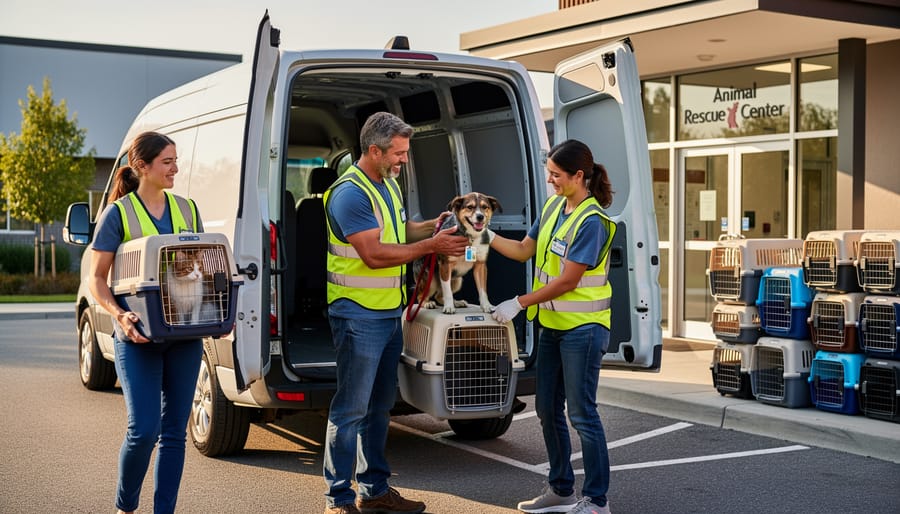
Transport volunteers are crucial in a sprawling city like LA. Whether it’s driving a dog from a shelter partner to a vet appointment across town or shuttling cats to weekend adoption events, these volunteers keep rescued animals moving toward their forever homes. Many rescues coordinate transport chains where multiple volunteers cover different legs of a journey, making it manageable even with a tight schedule.
Behind the scenes, administrative volunteers handle adoption applications, conduct reference checks, and coordinate schedules. Social media volunteers craft compelling posts that showcase available pets, share success stories, and build community engagement. Their work directly increases adoption rates by connecting animals with potential families scrolling through Instagram or Facebook.
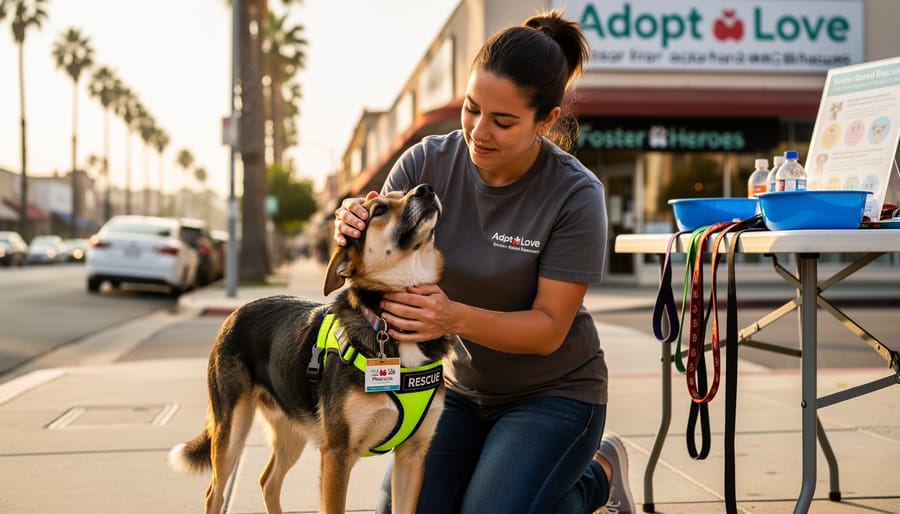
Event volunteers staff adoption events at local pet stores and farmers markets, giving shy dogs confidence and answering questions from curious families. Fundraising volunteers organize everything from bake sales to virtual campaigns, ensuring rescues have resources for medical care and supplies. Photography volunteers capture the personality of rescue pets in photos that make adopters fall in love at first sight.
Your unique skills matter. Whatever time you can give makes a real difference in saving lives.
Why Los Angeles Needs You: The Reality of Pet Homelessness in 2026
Los Angeles is home to millions of people who love animals, yet thousands of dogs and cats still need help finding safe homes each year. The city’s municipal shelters handle an overwhelming number of intakes, and while they do vital work, space and resources remain stretched thin. Rescue organizations have stepped in to bridge this gap, but here’s the challenge: most rescues operate without physical facilities, relying entirely on volunteer foster homes to house animals until adoption.
This volunteer-powered model works beautifully when there are enough foster families. When there aren’t, rescues must turn away animals in urgent need, even when they desperately want to help. It’s not about lack of will or funding for veterinary care. The bottleneck is simpler and more fixable: not enough people know they can open their homes temporarily and save a life.
The math is straightforward. One foster volunteer can save multiple animals throughout the year. A dog who spends eight weeks in a foster home before adoption frees up that space for the next dog in need. Multiply that by hundreds of foster families across LA, and you see how volunteer participation directly translates to lives saved.
What makes this moment in 2026 particularly hopeful is the growing awareness that rescue work doesn’t require special credentials or a farm in the countryside. Regular people in apartments, families with kids, young professionals working from home, retirees looking for purpose are all successfully fostering in Los Angeles right now.
The need is real, but so is the solution. Every neighborhood in this sprawling city holds potential volunteers who simply haven’t realized yet that they’re exactly who local animals are waiting for. The question isn’t whether you’re qualified to help. It’s whether you’re willing to try.
Getting Started: Your Path to Becoming an Animal Rescue Volunteer
Taking the first step toward becoming an animal rescue volunteer in Los Angeles is easier than you might think. The volunteer community here is genuinely welcoming, and rescue organizations understand that everyone starts somewhere. You don’t need special qualifications or previous experience, just a willingness to learn and a heart for helping animals in need.
Here’s how to begin your journey as a volunteer:
- Research organizations that match your values and schedule. Los Angeles has dozens of animal rescue groups, each with its own focus and volunteer needs. Spend time exploring their websites, reading their social media posts, and getting a feel for their mission. Some rescues specialize in specific breeds, while others focus on senior animals or those with medical needs. Find one that resonates with you personally.
- Attend an orientation or information session. Most rescue organizations hold regular volunteer orientations where you can learn about their programs, ask questions, and meet current volunteers. These sessions are pressure-free, you’re not committing to anything yet, just gathering information to see if it’s a good fit.
- Complete the application and screening process. This typically includes a written application, reference checks, and sometimes a home visit if you’re interested in fostering. Don’t let the screening intimidate you, it’s designed to ensure successful matches between volunteers, animals, and the organization’s needs.
- Participate in required training. Whether you’re planning to foster, transport, or help with events, you’ll receive guidance specific to your role. Training might cover animal handling, safety protocols, or the organization’s procedures. This investment sets you up for success and confidence.
- Start small and gradually expand your involvement. You might begin by helping at a single adoption event or fostering one animal before taking on more. There’s no rush, and the best volunteers are those who pace themselves sustainably.
Many prospective volunteers worry they won’t have enough time or the right skills, but rescue organizations work with people from all backgrounds and schedules. Your contribution, whatever form it takes, becomes the heart of every success story these organizations create. The most important thing is showing up and being willing to learn alongside a supportive community that genuinely wants to help you succeed.

Real Stories from the Field: LA Volunteers Share Their Journeys
Maria, a graphic designer in Silver Lake, thought she’d just foster “one dog” to see if it was for her. That was three years and twenty-seven foster dogs ago. She still remembers her first foster, a timid terrier mix found wandering near Echo Park. “I had no idea what I was doing,” she laughs. “I called my foster coordinator three times the first night because he wouldn’t eat.” That coordinator walked her through it, and by week two, Maria was hooked. Watching that scared little dog transform into a confident, tail-wagging companion who found his forever home changed something in her. Now she specializes in shy dogs who need a patient hand. Her small apartment has housed everything from Chihuahuas to pit bulls, and she’s learned that the goodbye, watching them leave with their new families, never gets easier. It just gets more worth it.
James didn’t think he had time to volunteer. Between his marketing job in Culver City and coaching his daughter’s soccer team, his calendar was packed. But after his family’s beloved rescue dog passed away, he felt a pull to give back somehow. He started small, doing weekend transport runs, picking up dogs from partner shelters and driving them to foster homes or adoption events across LA. “It’s just a few hours on Saturday mornings,” he explains, “but knowing I’m the bridge between a shelter kennel and a warm bed makes those hours feel important.” His daughter sometimes rides along, and he’s watched her develop a compassion for animals that makes him proud. Last month, they transported a mama dog and her puppies from Palmdale to a foster home in Pasadena. His daughter talked about it for days.
Then there’s Keiko, a recent college grad who wasn’t sure what came next in her life but knew she wanted it to matter. She discovered volunteer-powered rescue through an adoption event at her local farmers market and signed up to help with social media. She writes the adoption posts, takes photos at events, and manages inquiries from potential adopters. “I thought it would be casual,” she admits, “but these dogs become real to you fast.” She’s learned photography skills, sharpened her writing, and built genuine friendships with other volunteers who share her values. When a dog she’d been posting about for weeks finally got adopted, she cried happy tears in her car. She’s found her people, and she’s found her purpose, at least for now.
What to Expect: The Joys and Challenges of Rescue Volunteering
Rescue volunteering will crack open your heart in ways you never expected. The first time you watch a scared, shut-down dog finally wag their tail, or a skeletal cat purr in your lap after weeks of patient care, something shifts inside you. These moments become your fuel, the reason you keep showing up even when it’s hard.
But let’s be honest about what this work demands. You’ll fall in love with animals you can’t keep. You’ll cry over the ones you couldn’t save. You’ll spend Saturday mornings cleaning kennels when your friends are brunching, and you’ll check your phone obsessively when you’re fostering a sick puppy. The emotional weight is real, and anyone who tells you otherwise hasn’t done this work.
- You directly save lives and witness incredible transformations in animals you’ve helped.
- You join a supportive community of people who share your values and become lifelong friends.
- You develop new skills in animal care, behavior, and advocacy while growing as a person.
- You experience unconditional love and gratitude from the animals in your care.
- You face emotional difficulty when animals don’t make it or when saying goodbye to fosters hurts deeply.
- You commit significant time that can conflict with work, travel, and social obligations.
- You risk foster failures where you can’t bear to give up an animal you’ve bonded with.
- You sometimes feel helpless knowing you can’t save every animal that needs help.
What makes this work sustainable is the community around you. Other volunteers understand the 2 a.m. bottle feedings and the grief when a foster finds their forever home. They celebrate your wins and hold space for your losses. Organizations like Lincoln Pet Volunteers provide mentorship, veterinary support, and a network of people who’ve been exactly where you are now. You’re never expected to navigate the hard parts alone.
The truth is, rescue volunteering changes you. It makes you more empathetic, more resilient, and more aware of what you’re capable of. Yes, your heart will break sometimes. But it will also expand in ways that make every challenge worth it.
How Volunteer-Powered Rescues Support Their Teams
Organizations like Lincoln Pet Volunteers understand that supporting volunteers isn’t optional, it’s essential. When you join a rescue team in Los Angeles, you’re not handed a foster dog and left to figure it out alone. Reputable rescues invest in their volunteers because they recognize why volunteers matter to their mission’s success.
Most LA rescues provide comprehensive onboarding that covers everything from reading animal body language to handling medical emergencies. You’ll learn the basics before your first foster arrives, then continue developing skills through workshops on topics like behavior modification, puppy socialization, and managing medical cases. This ongoing education helps volunteers feel confident rather than overwhelmed.
The real backbone of volunteer support, though, is the community itself. Many rescues maintain active group chats where experienced fosters answer questions at all hours. Struggling with a new foster’s separation anxiety at 10 p.m.? Someone who’s been there will respond with practical advice. This peer network becomes invaluable, especially during challenging placements.
Mentorship programs pair new volunteers with seasoned ones, creating relationships that often last years. Your mentor becomes your go-to person for questions, reassurance, and the occasional pep talk when you’re feeling discouraged.
Financial support matters too. Volunteer-powered rescues cover veterinary care, food, supplies, and medications for foster animals. You provide the home and love, they handle the bills. Organizations also facilitate connections with local vets, trainers, and behaviorists who understand rescue animals.
Perhaps most importantly, good rescues check in regularly. They ask how you’re doing, not just how the foster is doing, recognizing that caring for animals in transition takes an emotional toll worth acknowledging.
Making It Work: Balancing Volunteering with Your Life in LA
Living in Los Angeles means juggling traffic, work, and a packed social calendar, but thousands of locals prove every day that animal rescue volunteering fits into even the busiest schedules when you approach it strategically.
The key is treating your volunteer commitment like any other important appointment rather than something you squeeze in when convenient. Block out specific times each week, whether that’s Saturday mornings for foster dog walks or Wednesday evenings for administrative tasks. Many LA rescue volunteers report that having a set schedule makes it easier to plan around their commitments and prevents volunteering from feeling like an afterthought.
Start small and build from there. You don’t need to foster three dogs, coordinate transport routes, and manage social media simultaneously. Pick one role that genuinely excites you and do it consistently. A volunteer who shows up reliably for one task every week is more valuable than someone who overcommits and burns out after a month.
Here are practical strategies that help LA volunteers maintain sustainable involvement:
- Set clear boundaries about your capacity and communicate them upfront with your rescue coordinator
- Share your realistic availability from the start, including busy seasons at work or planned vacations
- Choose one primary role and master it before adding additional responsibilities
- Schedule volunteer activities during off-peak traffic hours when possible, or find opportunities close to home or work
- Connect with a volunteer buddy for accountability, shared transport, and mutual support
LA traffic deserves special mention because it’s a legitimate obstacle. Many volunteers choose rescues near their neighborhoods or coordinate volunteer shifts around their existing routes. Some foster specifically for organizations that provide transport support, eliminating the need for multiple cross-city drives.
Remember that stepping back temporarily doesn’t make you a quitter. Life happens, and responsible rescues understand when volunteers need to pause during demanding work periods, family obligations, or personal challenges. Communicating honestly about your bandwidth protects both you and the animals who depend on consistent care.
Every animal that finds a safe haven in Los Angeles does so because someone chose to show up. That person might be folding towels at a weekend adoption event, opening their home to a nervous foster dog, or simply sharing a rescue post that reaches exactly the right adopter. The volunteers who power LA’s rescue community aren’t extraordinary people with unlimited time and resources. They’re working parents, college students, retirees, and young professionals who decided their city’s animals mattered enough to carve out space in already-full lives.
The transformation works both ways. Yes, you’ll change the trajectory of animals who desperately need you. But the work also changes you, it connects you to a community of people who refuse to look away, who understand that compassion requires action, and who celebrate every small victory together. The kitten you bottle-feed at 2 a.m., the scared shelter dog who finally relaxes in your living room, the senior cat who purrs in your lap, they’re not just animals you’re helping. They’re teachers showing you what unconditional trust looks like, what resilience means, and how much difference one person truly makes.
Los Angeles has thousands of animals waiting right now. They need your spare bedroom, your Saturday morning, your social media skills, or whatever piece of yourself you can offer. The LA rescue community is ready to welcome you, support you, and show you exactly how to turn your compassion into impact. Start small, start today, and discover what’s possible when you show up.