
Yes, you can give a ferret a wonderful home, and the biggest thing to know up front is time. Ferrets need 2 to 4 hours out of their cage every day, one-on-one with their people, plus several hours of supervised free-roam in a safe, enclosed room or fenced-in area. That’s the heart of it. Everything else, from housing to budget, builds around those daily hours of play.
If that sounds like a joyful kind of commitment rather than a heavy one, you may be a great match. Ferrets are curious, bouncy, endlessly entertaining animals who bond closely with the people who show up for them. The costs are worth a look too. Pet stores typically price ferrets at $400 to $600, while rehoming fees run from $60 to $1200 depending on age, cage, and supplies included. Some shelter promotions make qualifying adoptions free, with spaying or neutering, microchipping, and vaccinations covered, and ferrets arriving at shelters get an intake exam and care for any ailments.
Below, we’ll walk through housing, the adoption and rehoming process, and a gentle readiness check, so you can decide with confidence and warmth.
Why Ferrets Steal Hearts (and Why Shelters Love Matching Them Carefully)

Ask anyone who has lived with a ferret and you’ll hear the same thing: they are pure joy wrapped in a long, wiggly body. Ferrets are playful, curious, and surprisingly social, always poking into corners, hiding small treasures, and inviting their people to join in the fun. When a ferret gets excited, you might see the famous “weasel war dance,” a happy hopping, sideways-scampering burst of energy that is hard to watch without grinning.
Picture a first-time ferret family sitting on the living room floor, watching their new friend tunnel through a blanket, pop out the other side, and bounce off sideways in total delight. Moments like that are why so many people fall in love.
That same big personality is also why ferrets aren’t low-maintenance starter pets. They thrive on attention and need real time out of the cage each day, along with a safe space to explore. It’s a lot of love to give, and that’s a wonderful thing when the match is right.
This is exactly why shelters and rescues focus on readiness rather than rushing placements. Taking time to match the right ferret with the right home helps both sides settle in happily and stay together for the long haul. Think of readiness as the very first step of a great match, not a hurdle. When you know what a ferret needs and feel excited to provide it, you’re already on your way.
The Daily Commitment: Time Out of the Cage Matters Most
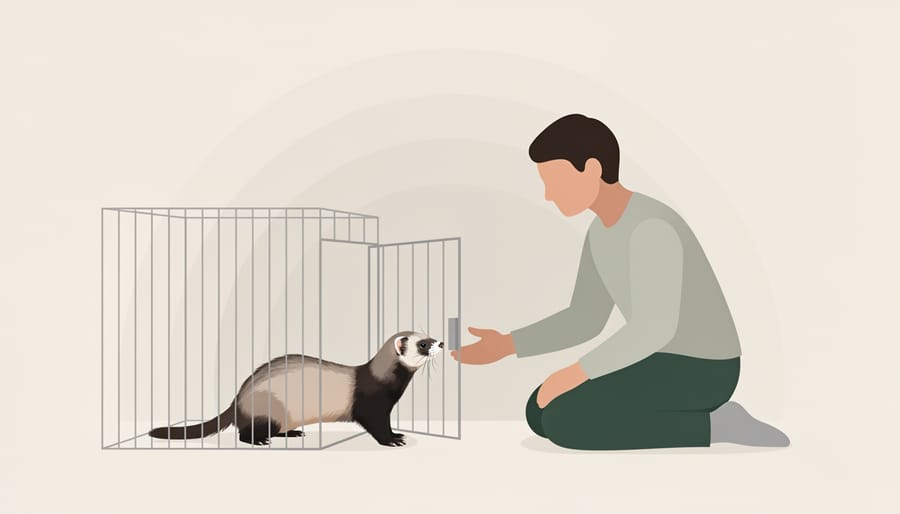
What a Ferret-Friendly Day Can Look Like
Picture a ferret-friendly day as a few joyful pockets of time woven into your normal routine. In the morning, you might open the cage and let your ferret stretch, explore, and pounce around a safe, fenced-in room while you have your coffee. During the workday, many ferrets happily nap in their cozy cage home base.
Then comes the heart of the day. When you’re back in the evening, that’s prime time for one-on-one fun: tunnel games, gentle cuddles, and a little “weasel war dance” energy. Families can take turns, so everyone gets to bond.
Add it up, and the 2-4 hours of daily out-of-cage time can fit around real life. The key is that supervised, enclosed free-roam time is a priority, not an afterthought, because that’s where the trust and the laughter really grow.
Setting Up a Safe Home: Housing and Free-Roam Space

A ferret-ready home starts with two simple pieces: a comfy cage that works as home base, and a safe, enclosed space for supervised free-roam time. Think of the cage as the bedroom, a cozy spot for sleeping, snacking, and settling in. The free-roam area is the playground, and that’s where most of the fun happens.
Since ferrets need several hours of supervised free-roam time each day, that second space really matters. It can be a fenced-in area or a whole room, as long as it’s enclosed so your ferret can explore without wandering off. Many families pick a spare room, a corner of the living room, or a pet-proofed hallway.
Here’s a fun trick: get down on the floor and see your space the way a ferret would. Ferrets are curious, flexible, and amazing at squeezing into spots you’d never expect. Small gaps behind appliances, openings under furniture, loose cords, and tiny holes in walls or cushions can all look like exciting tunnels to explore. A quick tidy-up now keeps playtime relaxed for everyone.
A few easy habits help:
– Peek under couches, recliners, and beds before each play session.
– Keep small items, rubber bands, and fragile things out of reach.
– Close off any gaps or openings you spot at ferret height.
– Stay nearby while your ferret explores, since supervision is part of the fun.
You don’t need a fancy setup, just a thoughtful one. A little preparation goes a long way toward helping a new ferret feel safe, happy, and ready to play.
What Adopting a Ferret Typically Costs (and What Shelter Adoption May Include)
Money matters when you’re welcoming a new family member, so let’s look at the numbers. Adopting a ferret can look quite different depending on where your new friend comes from, and the verified figures below show how.
| Adoption Route | Typical Cost | What May Be Included |
|---|---|---|
| Pet store | $400-$600 | Varies by store, so it’s worth asking |
| Rehoming | $60-$1200, depending on age, cage, and supplies included | Can include a cage and supplies |
| Qualifying shelter adoption promotion | Free | Spaying/neutering, microchipping, and vaccinations |
Rehoming fees cover a wide range because every situation is a little different. A younger ferret arriving with a cage and a bag of supplies may sit at the higher end, while an older ferret with fewer extras may sit closer to the lower end. Neither is better or worse. It simply depends on what you need and what the ferret comes with.
Shelter adoption can be a caring, supported path. Shelter ferrets receive an intake exam, and the team takes care of their ailments, so you aren’t starting from scratch. During promotions, qualifying adoptions are free and include spaying/neutering, microchipping, and vaccinations, which can ease the budget considerably.
Since every organization works a little differently, the best next step is a friendly conversation. Ask what’s included in the adoption fee, which supplies come along, and what medical care has already been done. Good shelters are happy to answer, because they want your match to feel confident and well supported from day one.
How Ferret Adoption and Rehoming Work at a Shelter
Adopting a ferret from a shelter is usually a warm, step-by-step conversation rather than a quick transaction. It often starts with reaching out to the shelter or rescue to ask which ferrets are available and what each one needs. From there, staff can share what they know about a ferret’s personality, energy level, and any special care. This is the perfect time to talk honestly about your home, your schedule, and the several hours of daily playtime a ferret enjoys. Many shelters give their ferrets an intake exam and care for their ailments, so you can ask what has already been taken care of. Once everyone feels good about the fit, you finalize the match and welcome your new family member home.
Sometimes life changes, and a ferret owner needs help finding a new home for a beloved pet. There’s no shame in that. The Ferret Shelters Directory offers placement and surrender suggestions to help people rehome their ferrets successfully, so every animal can land somewhere caring.
You might also hear the term “commitment date.” It’s the date by which an animal urgently needs placement outside the shelter because of severe medical or behavioral challenges. Knowing about it helps explain why timely support makes such a difference, and it’s one of the reasons why shelters matter so much to their communities. Behind every happy adoption is a team of caring people, and if you’re curious about what volunteers do you’ll see how much heart goes into each match.
Is Now the Right Time? A Readiness Check for Future Ferret Families
Taking a ferret home is a big, joyful step, so it helps to pause and picture an ordinary week. Do you have two to four hours most days for one-on-one time? Is there a safe, enclosed room or fenced-in area for supervised free-roam? Can your budget comfortably handle both the adoption or rehoming fee and everyday care? Do the people you live with feel excited too? And can you picture caring for this little weasel for years to come? Those questions simply help you meet a ferret’s needs with confidence, and thinking them through is a lovely sign of care.
If you read that list and thought “maybe not yet,” that is completely okay. Waiting until life lines up is a kind choice, and it’s one of the ways a forever home commitment begins. In the meantime, there are plenty of ways to help animals in need. You can foster, volunteer your time, donate supplies, or simply share adoptable pets with friends. These all reflect the heart of the Lincoln Pet Volunteers mission: care, respect, and kindness for every animal and person.
Ferret Adoption Questions, Answered
How much time does a ferret need out of the cage?
Ferrets need about 2 to 4 hours of one-on-one time with their people each day, outside the cage. That includes several hours of supervised free-roam in an enclosed, fenced-in area or room.
Are shelter ferrets cared for medically?
Yes. Shelter ferrets all get an intake exam, and their ailments are taken care of. Some qualifying adoptions during promotions also include spaying or neutering, microchipping, and vaccinations.
How much do ferrets typically cost?
Ferrets from pet stores typically cost $400 to $600. Rehoming fees range from $60 to $1200, depending on age and whether a cage and supplies are included, and some qualifying adoptions are free.
What if I can no longer keep my ferret?
It happens, and there’s no shame in asking for help. The Ferret Shelters Directory offers placement and surrender suggestions to help you rehome your pet ferret successfully.
What is a commitment date?
It’s the date by which an animal urgently needs placement outside the shelter because of severe medical or behavioral challenges. Timely help can make a real difference for these animals.
If your own question isn’t here, ask the shelter or rescue you’re talking with. They’d much rather answer a dozen questions now than have you feel unsure later, and the conversation is often the first step toward a great match.
With the right preparation, a ferret can bring years of joy, laughter, and surprising affection into your home. Those goofy dances and curious little explorations are even sweeter when you know you were truly ready to say yes. And you don’t have to figure it out alone. Shelters and rescues are there to answer your questions, share what each ferret needs, and help you feel confident about the match.
If you’re ready, adoption is a wonderful place to start. If the timing isn’t quite right, fostering or volunteering can still make a real difference for animals in need while you get to know them. However you choose to help, every bit of patience and kindness gives a ferret a chance at a loving home.