
Caring for a six-week-old puppy requires round-the-clock attention, specialized feeding every three to four hours, and close health monitoring because these tiny pups are still incredibly vulnerable without their mother. At this age, puppies need help regulating body temperature, aren’t fully weaned, and have developing immune systems that make them susceptible to illness and stress. Most experts recommend puppies stay with their mothers until eight weeks, but circumstances like abandonment, orphaning, or rescue volunteer work sometimes mean six-week-old puppies need dedicated foster care to survive and thrive.
If you’ve found yourself caring for a puppy this young, you’re taking on one of the most rewarding challenges in animal rescue. These little ones depend entirely on you for warmth, nutrition, hygiene, and socialization during a critical developmental window. The good news? With the right approach and some basic supplies, you can provide everything your six-week-old puppy needs to grow into a healthy, well-adjusted dog.
This guide walks you through the specific care requirements for six-week-old puppies, from setting up a safe space and managing feeding schedules to recognizing warning signs that require veterinary attention. You’ll learn exactly what to expect at this age, how to handle common challenges, and when your puppy is ready to transition to more independent care. Whether you’re fostering through a rescue organization or caring for an unexpectedly early weaning situation, you have the power to make a life-changing difference during these crucial early weeks.
What You’ll Need Before Your Puppy Arrives
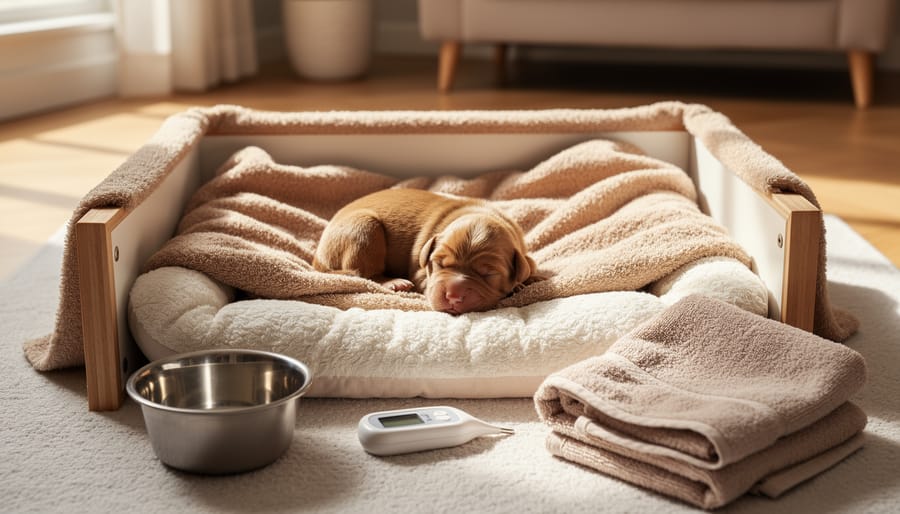
Setting up for a six-week-old puppy means creating a safe haven that addresses their fragile developmental stage. Unlike older puppies, six-week-olds can’t regulate their body temperature well, need frequent small meals, and require constant monitoring. Gathering the right supplies before your puppy arrives makes those critical first 90 days far less stressful and sets you up to respond quickly if problems arise.
Here’s what you need organized by purpose:
- Feeding supplies: shallow food dishes, puppy milk replacer or appropriate weaning formula, high-quality puppy food for making mush, small feeding syringes for supplemental feeding if needed
- Warmth and bedding: heating pad with adjustable temperature, soft fleece blankets without loose threads, small cardboard box or plastic crate as a secure den, towels for layering
- Safety essentials: baby gate to confine puppy to one safe room, exercise pen for supervised playtime, covers for electrical cords, non-toxic cleaning spray for accidents
- Health monitoring tools: digital scale accurate to 0.1 ounce for daily weigh-ins, thermometer designed for puppies, notebook or app for tracking weight and behavior changes
The heating pad deserves special attention. Position it under only half the sleeping area so your puppy can move away if too warm. Wrap it in a towel and keep the setting on low. Never place a puppy directly on a bare heating pad.
Choose a quiet area away from household traffic for your setup. Six-week-olds startle easily and need undisturbed sleep between feedings. The space should be easy to clean since accidents happen frequently at this age. Vinyl flooring or washable rugs work better than carpet.
Keep everything within arm’s reach of the puppy’s sleeping area. You’ll be checking on them every few hours initially, and having supplies nearby means you won’t leave a vulnerable puppy unattended while searching for items.
Important Safety Warnings and Red Flags
At six weeks, puppies are remarkably vulnerable. Their immune systems are still developing, they can’t regulate body temperature effectively, and they lack the reserves to bounce back from even minor setbacks. Understanding what can go wrong, and recognizing warning signs early, can literally save your puppy’s life.
Hypothermia: A Silent Threat
Young puppies chill quickly because they can’t shiver efficiently to generate warmth. If your puppy feels cool to the touch, becomes lethargic, or stops eating, check their body temperature if you have a rectal thermometer (normal is 100-102°F for puppies this age). Move them to a warm environment immediately, use a heating pad wrapped in towels (never direct contact), and call your vet. Hypothermia can progress to organ failure within hours.
Dehydration and Hypoglycemia
Puppies dehydrate fast, especially if they’re not nursing well or have diarrhea. Gently pinch the skin on the back of the neck, it should snap back instantly. If it tents or stays raised, that’s dehydration. Other signs include dry gums, sunken eyes, and weakness. Hypoglycemia (low blood sugar) often accompanies dehydration and shows as wobbliness, confusion, or seizures. Rub a bit of honey or corn syrup on the gums and get to a vet immediately.
Fading Puppy Syndrome
This heartbreaking condition causes puppies to deteriorate rapidly, often within 24-48 hours. Early signs include constant crying (indicating discomfort), failing to gain weight, crawling away from siblings, and general weakness. Fading puppy syndrome has multiple causes, infections, congenital defects, inadequate nutrition, and requires immediate veterinary intervention. Don’t wait to see if the puppy improves on its own.
Keep puppies away from other pets until fully vaccinated, as they’re susceptible to parvo, distemper, and other diseases. Avoid public spaces, dog parks, and areas where unknown animals have been. At home, secure electrical cords, remove small objects they could choke on, and never leave puppies unsupervised on elevated surfaces. Their coordination is poor, and falls can cause serious injury.
Handling Precautions
Support the puppy’s entire body when lifting, one hand under the chest, one under the hindquarters. Young children should sit on the floor to hold puppies, reducing drop risk. Wash your hands before and after handling to prevent disease transmission, and limit handling sessions to avoid exhausting the puppy.
Your Week-by-Week Care Routine
Feeding: What, When, and How Much
At six weeks old, most puppies are transitioning from their mother’s milk to solid food, though the exact stage depends on their individual circumstances. If you’re fostering a puppy who was separated from mom early, you may need to provide puppy milk replacer in addition to solid foods. Healthy puppies at this age should eat four times daily, spaced evenly throughout the day, typically around 7 AM, noon, 5 PM, and 10 PM.
For portion sizes, aim for approximately one-quarter to one-third cup of moistened puppy food per meal, though this varies based on breed size and body condition. Toy breeds need less; larger breed puppies need more. The best gauge is your puppy’s body: you should be able to feel their ribs easily but not see them prominently. Weigh your puppy every two to three days using a kitchen or baby scale. They should gain roughly 5-10% of their body weight weekly.
If your puppy isn’t fully weaned, follow this transition process:
- Start with three parts puppy milk replacer to one part high-quality puppy kibble, creating a soupy mixture.
- Let the kibble soak for 10-15 minutes until completely soft before offering it in a shallow dish.
- Over seven to ten days, gradually decrease the liquid and increase the kibble ratio.
- By week seven or eight, offer kibble with just enough warm water to soften it slightly.
- Monitor stools throughout, if diarrhea occurs, slow the transition and add more liquid back temporarily.
Choose a puppy-specific formula with at least 22% protein and 8% fat to support rapid growth. Avoid adult dog food entirely, as it lacks the nutrients developing puppies require. Keep fresh water available at all times in a heavy, tip-proof bowl, though six-week-olds still get significant hydration from their moistened food. If your puppy refuses food for more than one meal or shows signs of lethargy, contact your veterinarian or rescue coordinator immediately.
Temperature Regulation and Sleep Needs
Your 6-week-old puppy can’t regulate body temperature like an adult dog yet. Puppies this age need environmental warmth to stay healthy, especially if they were separated from their mother and littermates early.
Keep the sleeping area between 75-80°F. A heating pad designed for pets works well, but only place it under half the bedding so your puppy can move to a cooler spot if needed. Never let the pad touch the puppy directly. Cover it with a towel or blanket and check frequently that it stays on low heat. Some foster parents prefer microwavable heating discs that don’t have cords puppies might chew.
Watch for signs your puppy is too cold, crying constantly, cool ears, or huddling in corners. Shivering is actually a late sign, so catch problems earlier.
Six-week-olds sleep 18-20 hours daily. That’s normal, not cause for concern. Create a quiet sleeping space away from household traffic. Use washable bedding like fleece blankets or puppy pads underneath, since accidents happen frequently at this age. A cardboard box or small crate with low sides lets them feel secure.
If your puppy suddenly becomes lethargic or won’t wake for feedings, contact your rescue coordinator or vet immediately.
Potty Training Foundations
At six weeks, your puppy’s bladder control is still developing, and accidents are completely normal. These tiny pups typically need to eliminate every one to two hours when awake, plus immediately after eating, drinking, sleeping, or play sessions.
Set up a designated potty area that’s easy to reach, a puppy pad station near their sleeping space works well for foster situations. If you have safe outdoor access away from unvaccinated dogs, choose a small section of grass. Consistency matters more than location at this stage.
Watch for your puppy’s elimination cues: sniffing the ground, circling, whining, or suddenly stopping play. Gently carry them to the potty spot when you notice these signs. After they go, offer quiet praise. Don’t expect them to signal their needs yet or understand “holding it” during sleep.
Clean accidents immediately with an enzyme cleaner designed for pet urine. Regular household cleaners won’t eliminate the scent markers that draw puppies back to the same spot. Never scold a six-week-old puppy for accidents, they lack the physical and mental development to connect punishment with the behavior. Your job right now is simply establishing the routine and keeping their space clean. Real house training comes later, around eight to twelve weeks, when bladder control improves.
Gentle Socialization and Handling
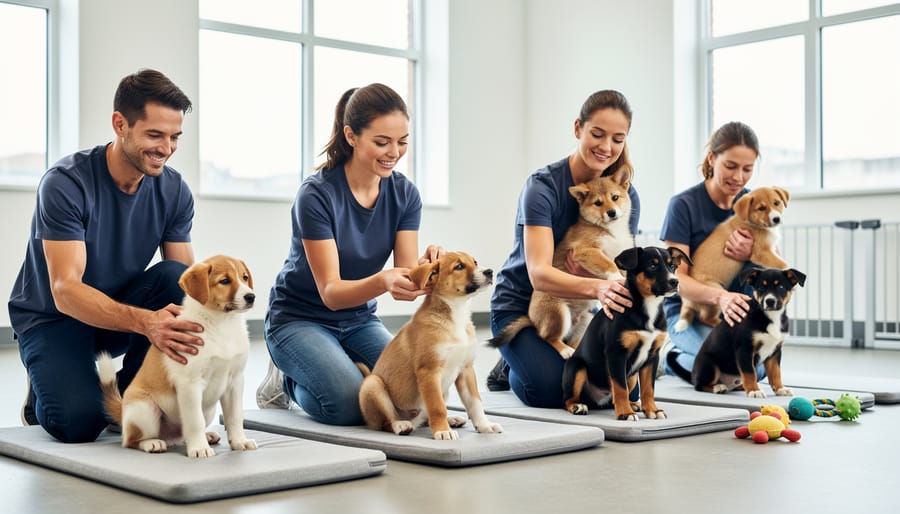
At six weeks, your puppy is in the critical socialization window, but their immune system is still vulnerable. Focus on gentle, controlled experiences rather than broad exposure. Handle your puppy several times daily with calm, supportive touches, cradle them, gently examine paws and ears, and speak softly to build trust. If you’re fostering littermates, their play together teaches bite inhibition and dog communication naturally.
Limit visitors to vaccinated, healthy individuals who wash hands first. Avoid dog parks, pet stores, and areas where unknown dogs have been until after the first vaccine series. Instead, introduce household sounds like vacuum cleaners and doorbells at low volume, gradually increasing as your puppy stays relaxed. Keep sessions brief, five to ten minutes of new experiences, then let them rest. Watch for stress signals: excessive yawning, hiding, or whimpering mean it’s time to scale back and provide reassurance.
Health Monitoring and Veterinary Care
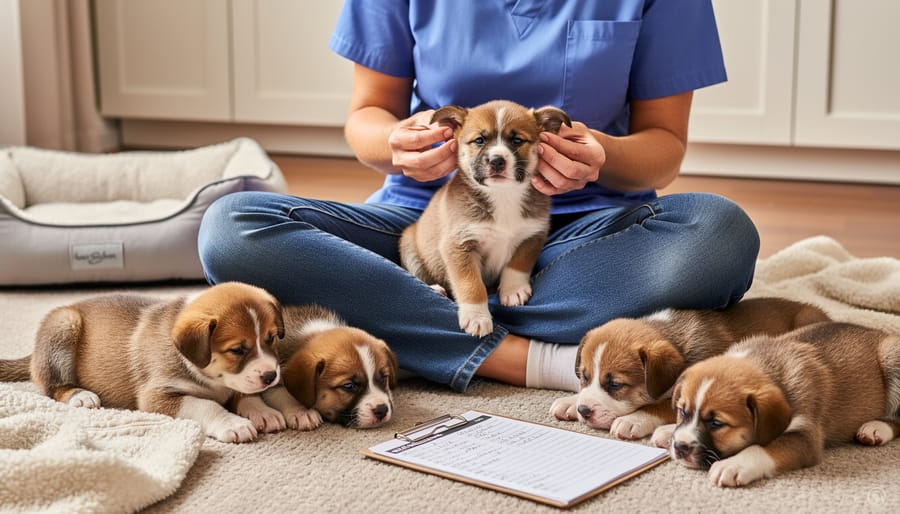
Tracking your puppy’s health daily becomes second nature once you know what to watch for. Weigh your puppy every morning on a kitchen scale and record the results. Healthy puppies should gain roughly 5-10% of their body weight each day, which means a one-pound puppy adds about an ounce daily. If weight stalls for more than a day or drops at all, contact your veterinarian immediately.
Check your puppy’s gums each morning by gently lifting the lip. Pink, moist gums signal good hydration and circulation. Pale, white, or tacky-feeling gums require urgent veterinary attention. Watch elimination patterns too. Your puppy should urinate frequently throughout the day and have soft, formed stools after most meals. Watery diarrhea or straining means you need to act fast.
Your puppy’s first vet visit typically happens around six weeks if they came from a rescue situation. The veterinarian will perform a nose-to-tail exam, listen to the heart and lungs, check for hernias, and assess overall condition. They’ll likely do a fecal test to screen for common intestinal parasites like roundworms and hookworms, which almost all puppies carry. Deworming medication starts at two weeks and continues every two weeks until 12 weeks of age, so your six-week-old has probably had at least two rounds already. If you’re fostering, your rescue coordinator will provide deworming records and schedule the next dose.
Vaccines begin at 6-8 weeks with the first combination shot protecting against distemper, parvovirus, and other diseases. This initial vaccine doesn’t provide full immunity yet, which is why puppies need boosters every three to four weeks until 16 weeks old. Keep your puppy away from public parks, pet stores, and unvaccinated dogs until the series completes.
Foster caregivers should maintain a simple health log noting daily weights, eating amounts, stool quality, and energy levels. Most rescue organizations provide medical care and will reimburse approved expenses or direct you to their partnered clinics. Always communicate changes immediately rather than waiting to see if issues resolve.
How to Tell If Your Puppy Is Thriving
A thriving 6-week-old puppy shows clear signs you’re doing everything right. Healthy puppies at this age gain about 10-15% of their body weight weekly, so you’ll notice steady growth when you weigh them every few days. Their eyes should be bright and curious, not cloudy or crusty, and their coat should feel soft and clean without bald patches or excessive scratching.
Watch their energy levels during wake periods. A healthy 6-week-old alternates between deep sleep and short bursts of playful activity. They should toddle around exploring, play-fight gently with siblings if present, and react positively when you approach. Lethargy or constant whimpering signals a problem worth checking with your vet.
Normal elimination means several soft but formed stools daily and regular urination. The stool shouldn’t be watery or contain blood. Healthy puppies also respond to your voice, make eye contact, and show increasing confidence each day as they discover their world.
Document your puppy’s progress with daily weight records, photos showing size changes, and brief notes about milestones like first solid food eaten or successful potty trips. This information helps your rescue coordinator tremendously and gives future adopters a beautiful record of the lifesaving work you’re doing, one foster at a time. Many foster parents keep a simple notebook or phone log tracking feeding times, weights, and behavioral changes, creating a valuable health history that travels with the puppy.
Common Questions About 6-Week-Old Puppy Care
Why are some puppies fostered or adopted at 6 weeks instead of 8 weeks?
Rescue organizations sometimes place puppies this young when the mother dog can’t care for them, wasn’t rescued with the litter, or if the puppies need bottle-feeding or medical attention that requires dedicated foster care. It’s not ideal, but it’s often a lifesaving necessity for orphaned or abandoned litters.
Can a 6-week-old puppy survive without its mother?
Yes, but they require attentive human care to replace what the mother would provide. You’ll need to handle feeding, temperature regulation, and stimulation for elimination if they’re younger than 6 weeks, though most 6-weekers are transitioning to solid food and can eliminate independently.
When can my 6-week-old puppy go outside safely?
Wait until your puppy completes their initial vaccination series around 16 weeks for public areas like parks or sidewalks. For now, stick to your private yard if it’s secure and hasn’t been accessed by unknown dogs, and carry your puppy rather than letting them walk in potentially contaminated areas.
Is it normal for my puppy to cry at night?
Absolutely. Your puppy just left their littermates and may feel anxious alone. A warm blanket, a ticking clock, or a stuffed animal can provide comfort, and keeping their crate near your bed helps them feel secure during this adjustment period.
How do I know if I’m doing a good job as a foster parent?
If your puppy is gaining weight steadily, staying warm, eating eagerly, and becoming more active and playful each day, you’re succeeding. Don’t hesitate to reach out to your rescue coordinator with questions, that’s what they’re there for.
Caring for a 6-week-old puppy raises questions that even experienced pet owners haven’t encountered. Many people wonder about the adoption process when puppies are placed this young, and whether special paperwork or foster-to-adopt arrangements apply. Most rescues retain ownership until puppies complete vaccinations, so you’ll likely formalize adoption later while providing foster care now.
If you’re uncertain about any aspect of care, contact your rescue organization immediately rather than waiting. They’d rather answer ten questions that turn out to be nothing than miss one sign of trouble. Building that relationship with your coordinator makes the experience better for everyone, especially the puppy. Consider this intensive care period as preparation, whether you’re fostering temporarily or planning to adopt, you’re giving this vulnerable pup the foundation they need. If this experience resonates with you, you might want to join volunteer programs that specialize in neonatal and young puppy care, where your skills will save more lives.
Caring for a 6-week-old puppy demands patience, vigilance, and round-the-clock attention, but the rewards extend far beyond watching a tiny life flourish. You’re providing something irreplaceable during the most vulnerable weeks of development. Every feeding, every warm nap in a safe space, every gentle touch is building the foundation for a confident, healthy dog.
If you’re fostering through a rescue organization, lean on your coordinator for guidance and veterinary support. Don’t hesitate to ask questions or report concerns. Your rescue family understands the challenges and celebrates every milestone alongside you.
As your puppy approaches 8 weeks, you’ll notice increasing independence, stronger play drive, and readiness for more structured socialization. Continue monitoring weight gain, coordinate upcoming vaccinations, and document personality traits that will help future adopters understand this little one’s unique character.
The bond forming now, through sleepless nights and careful feedings, creates trust that lasts a lifetime. Whether you’re fostering temporarily or welcoming a permanent family member, you’re giving this puppy the gift of security during their most critical weeks. That’s lifesaving work, and it matters profoundly.