
Finding dog rescue volunteer opportunities in your area starts with a simple online search paired with direct outreach to local shelters, humane societies, and breed-specific rescue groups. Most organizations actively seek volunteers for roles ranging from dog walking and kennel care to fostering, event support, and administrative help. The time commitment varies widely: some positions need just a few hours monthly, while hands-on care roles typically ask for a weekly shift of three to four hours.
If you’ve been thinking about giving back to animals in need, this is your moment. Thousands of rescued dogs across North America depend on volunteers who show up week after week to walk them, comfort them, and help them find forever homes. Organizations like the BC SPCA offer volunteer opportunities including dog walking and special events, while groups such as Humane World for Animals in Vaudreuil-Dorion, Quebec, run care and rehabilitation centers where volunteers assist in the ongoing care of dogs and cats rescued from harm.
The beauty of dog rescue volunteering is that there’s truly a role for everyone. You don’t need special training or previous experience to start. What matters is your genuine love for dogs, your reliability, and your willingness to learn. Whether you have two hours on a Saturday morning or can commit to a regular weekday shift, rescue organizations will welcome your helping hands and open heart.
Why Volunteer with Dog Rescue Organizations
Volunteers are the backbone of dog rescue operations. Every animal saved, every kennel cleaned, and every tail wagged during a shelter walk happens because someone chose to show up and help. Without volunteers, rescue organizations couldn’t function at their current scale, many groups operate on lean budgets and rely almost entirely on donated time to keep dogs fed, exercised, and socialized while they await their forever homes.
Beyond the direct impact on animals, volunteering with a dog rescue offers deeply personal rewards. You’ll develop hands-on skills in animal behavior, basic care, and even crisis response as you work alongside experienced staff and fellow volunteers. Many people discover hidden talents, some become skilled dog trainers, others find they’re naturals at event planning or social media outreach. The work connects you with like-minded people who share your passion for animal welfare, building a community that extends far beyond the shelter walls.
There’s also the emotional fulfillment that comes from knowing you’ve made a tangible difference. When you see a scared, underweight dog transform into a confident, healthy companion ready for adoption, you’ve been part of that journey. Understanding what volunteers do behind the scenes reveals how even small acts, walking a high-energy dog to prevent kennel stress, or simply sitting quietly with a timid pup, ripple through the entire rescue system.
Volunteer-powered models allow organizations to stretch every dollar further, directing funds toward medical care, spay/neuter programs, and emergency rescues rather than paid staff for routine tasks. Your time directly translates into more lives saved.
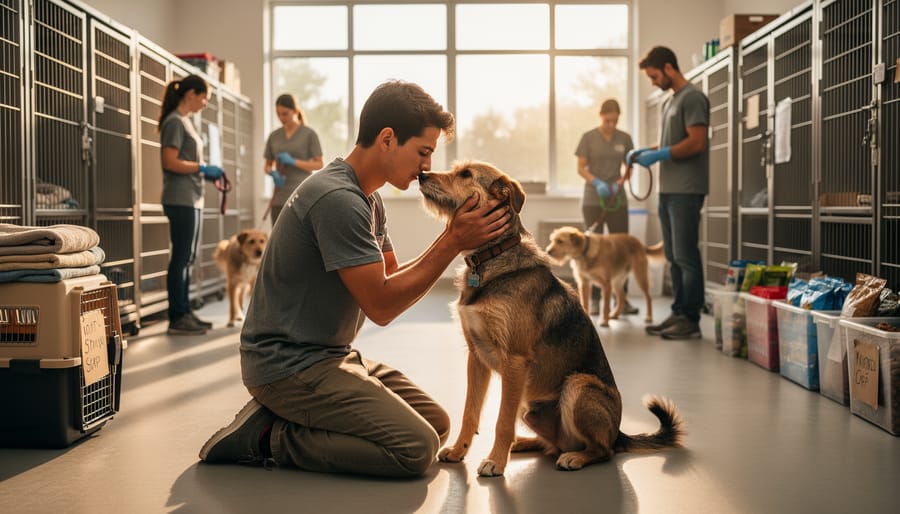
Types of Dog Rescue Volunteer Roles
1. Dog Walking and Exercise Volunteers
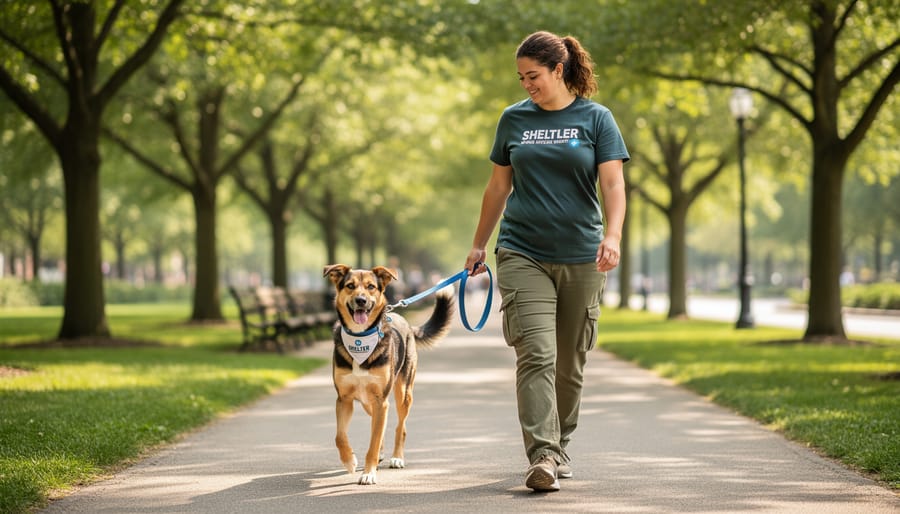
Dog walking volunteers provide essential exercise and mental stimulation for shelter dogs who spend most of their day in kennels. These volunteers take dogs on leashed walks around designated routes, allowing the animals to explore new scents, burn energy, and practice basic leash manners in a real-world setting. Beyond physical activity, regular walks help reduce kennel stress and give dogs the social interaction they crave, making them calmer and more adoptable.
Walking volunteers also play a subtle but important role in behavioral observation. Staff rely on volunteers to note how individual dogs react to other animals, people, traffic, and unfamiliar environments during outings. Does the dog pull constantly or walk politely? Do they startle at loud noises or remain calm? These observations help rescue staff match dogs with appropriate adopters and identify animals who might benefit from additional training or a quieter home environment.
2. Animal Care and Rehabilitation Volunteers
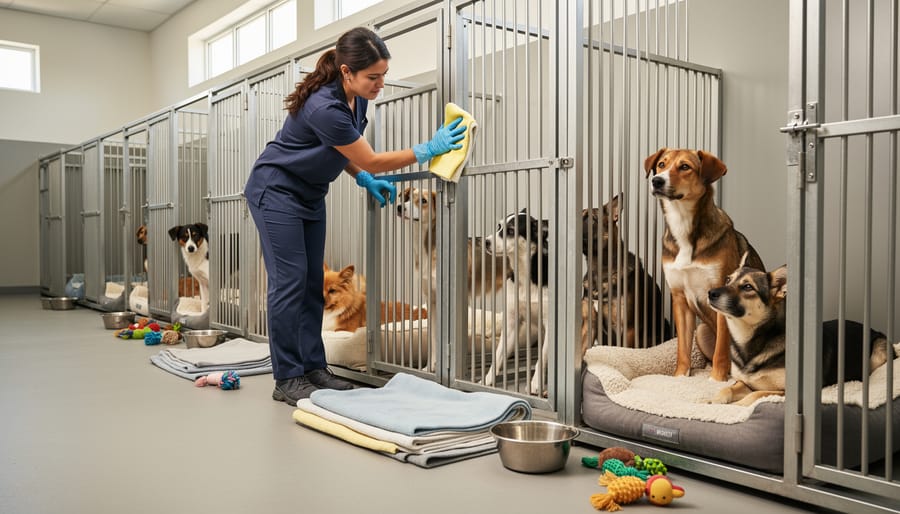
Animal care and rehabilitation volunteers form the backbone of daily rescue operations, handling essential tasks that keep shelter animals healthy and comfortable. These hands-on positions involve the less glamorous but vital work: cleaning enclosures and common areas, feeding, watering, restocking supplies, and washing dishes. You’ll also volunteer cleaning and feeding animals who’ve been rescued from difficult situations, giving them the stability they need to heal.
Beyond physical care, these volunteers socialize animals as directed by staff, helping dogs regain trust in people through gentle interaction. The work can be physically demanding and emotionally challenging when you’re caring for animals recovering from neglect or trauma. But it’s also where you see the most dramatic transformations. A dog who cowers in the back of a kennel on Monday might greet you with a wagging tail by Friday, thanks to the consistent, compassionate routine you provide. Organizations like Humane World for Animals in Vaudreuil-Dorion actively recruit volunteers for these critical care roles.
3. Foster Care Volunteers

Foster care volunteers open their homes to dogs who need a safe, quiet environment away from the shelter while they wait for permanent adoption. This role is critical for rescue operations, many organizations save lives one foster at a time relying entirely on community foster networks to take in new arrivals. Fostering allows rescues to accept more animals than their physical facilities can hold and gives dogs the chance to decompress, heal from medical procedures, or build confidence in a home setting. You’ll provide daily care, basic training, and socialization while the organization handles veterinary costs and adoption coordination. The commitment varies, some fosters care for a dog for just a week or two, while others provide longer-term support for animals with special needs or ongoing rehabilitation.
4. Special Events and Fundraising Support
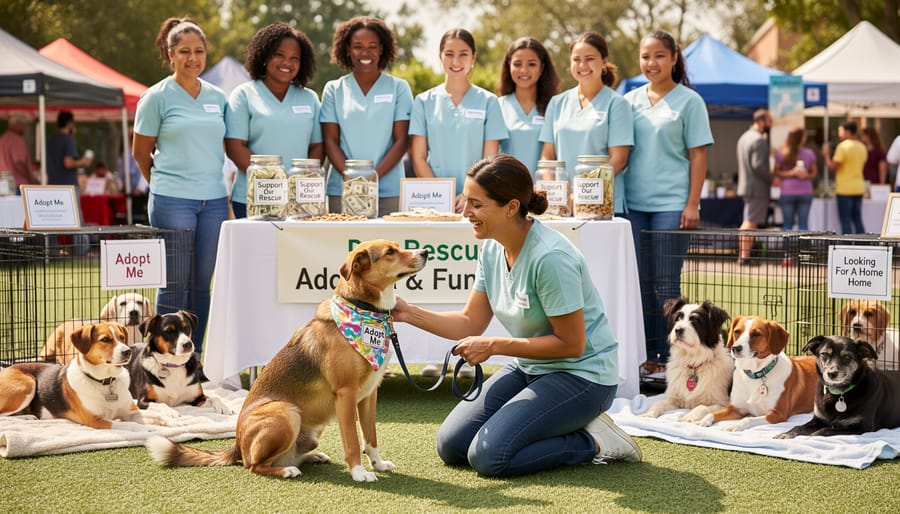
Special events and fundraising volunteer roles let you support rescue operations while connecting with your community. Many organizations rely on volunteers to staff adoption events at pet stores, farmers markets, and community festivals, you’ll help set up displays, answer questions about available dogs, and share information with potential adopters. These events create crucial visibility for rescue animals and generate adoption applications.
Fundraising activities offer another avenue to contribute without direct animal handling. Volunteers assist with charity runs, online auctions, bake sales, and donation drives that fund medical care, supplies, and facility operations. You might coordinate logistics, manage registration tables, or help with social media promotion during campaigns.
Community outreach programs also need volunteer support. Educational presentations at schools, tabling at community fairs, and public awareness campaigns all require enthusiastic volunteers to represent the organization and its mission. These roles suit people who enjoy public interaction and want flexible scheduling, many events happen on weekends or evenings, making them accessible for those with weekday commitments.
5. Administrative and Behind-the-Scenes Roles
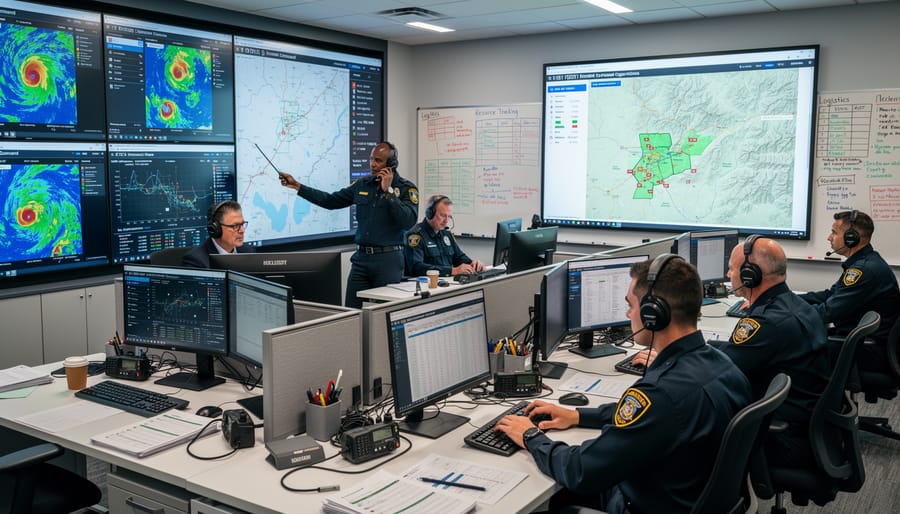
Not every volunteer role requires hands-on animal interaction. Administrative and behind-the-scenes positions form the backbone of rescue operations, handling essential tasks that keep organizations running smoothly. Social media volunteers create adoption posts, share success stories, and engage with online communities to increase visibility for available dogs. Application processors review adoption inquiries, conduct reference checks, and maintain records that match dogs with suitable homes. Transport coordinators arrange safe vehicle transfers between foster homes, veterinary appointments, and adoption events, a critical service for rescues operating across multiple locations. Other administrative roles include data entry, donation tracking, grant research, and general office support. These positions often offer flexible schedules and remote work options, making them ideal for volunteers with limited mobility, demanding work schedules, or expertise in marketing, communications, or business operations who want to contribute their professional skills to animal welfare.
How to Find Dog Rescue Volunteer Opportunities Near You
Finding volunteer opportunities at dog rescue organizations requires a strategic local search, but the effort pays off when you connect with a nearby group doing meaningful work. Start by identifying rescue organizations operating in your area, then reach out directly to learn about their current volunteer needs.
Search rescue websites and filter by your location. Many organizations, like the BC SPCA, maintain volunteer opportunity pages where you can view available positions by region and submit applications online. Look for a “Get Involved” or “Volunteer” section on rescue websites, which typically lists active opportunities and explains how to apply. Some rescues update these pages regularly as needs change, while others maintain ongoing applications for common roles like dog walking or animal care support.
Effective methods for locating local volunteer positions include:
- Contacting your local SPCA or humane society directly by phone or email to ask about volunteer programs
- Searching volunteer matching platforms like VolunteerMatch or Idealist using keywords like “animal rescue” and your city name
- Visiting municipal animal shelter websites, which often coordinate with rescue partners
- Joining local pet community groups on social media where rescues frequently post volunteer calls
- Asking your veterinarian or pet supply store staff about active rescue groups in the area
Foster-based rescues, which operate without physical shelter facilities, can be harder to discover through standard searches. These organizations rely entirely on volunteer foster homes and typically maintain smaller online presences. Search for “[your city] dog rescue” or “[your region] foster based rescue” to find these groups, and check their social media pages for volunteer needs beyond fostering, such as transport coordination or adoption event assistance.
When you find organizations that interest you, reach out even if they don’t advertise open positions. Many rescues maintain waitlists for popular roles or can suggest alternative ways to help. Express your specific interests, available schedule, and any relevant skills, this helps match you with the right opportunity when one opens up.
What to Expect During the Application Process
The volunteer application process varies by organization, but most rescues follow a similar sequence designed to match the right people with the right roles. Understanding what lies ahead helps you prepare and shows organizations you’re serious about contributing.
Most rescues begin with an expression of interest or online application form. The BC SPCA, for example, invites prospective volunteers to complete an expression of interest form after viewing available opportunities by location. You’ll typically answer questions about your availability, physical abilities, experience with animals, and which roles interest you most. Some organizations ask about your motivation for volunteering and whether you’re comfortable with emotionally difficult situations, rescue work isn’t always easy, and coordinators need to know you can handle seeing animals in distress or saying goodbye to fosters.
After your initial application, expect an interview or phone screening. This conversation helps staff assess whether you’re philosophically aligned with the organization’s mission and values, a key consideration for groups like the BC SPCA. Coordinators want to ensure volunteers understand the rescue’s approach to animal welfare and can represent the organization positively in public-facing roles.
Many rescues require background checks, especially if you’ll work unsupervised or handle sensitive information. You might also need to provide references. Once approved, new volunteers attend an orientation session covering safety protocols, handling techniques, organizational policies, and the specific responsibilities of your chosen role. Some rescues offer role-specific training, similar to the process of learning how to adopt a dog, where understanding procedures upfront leads to better outcomes for everyone involved.
Throughout this process, ask questions freely. Clarifying expectations early builds a foundation for a rewarding, long-term volunteer relationship.
Practical Information for Dog Rescue Volunteers
Before you show up for your first shift, understanding the practical expectations will help you feel prepared and confident. Most rescue organizations appreciate enthusiastic volunteers, but they also need people who can commit reliably and handle the physical realities of animal care work.
Time commitments vary significantly depending on the role you choose. Dog walkers might volunteer for two-hour blocks once or twice weekly, while foster volunteers provide round-the-clock care for days or weeks at a time. Administrative roles often offer the most flexibility, letting you contribute remotely on your own schedule. Many rescues ask for a minimum commitment, commonly three to six months, because training volunteers requires resources, and consistency helps both the organization and the animals who benefit from familiar faces. If you’re testing the waters, look for organizations that welcome one-time event volunteers before asking for ongoing commitments.
| Volunteer Role | Typical Time Commitment | Physical Requirements | Key Responsibilities |
|---|---|---|---|
| Dog Walking | 2-4 hours/week | Moderate; able to handle dogs on leash | Exercise dogs, provide socialization, observe behavior |
| Animal Care | 3-6 hours/shift, 1-2 shifts/week | Moderate to high; bending, lifting, standing | Clean enclosures, feed, water, restock supplies, socialize animals |
| Foster Care | 24/7 for days to weeks | Low to moderate; varies by dog’s needs | Provide temporary home, monitor health, transport to appointments |
| Events/Fundraising | 4-8 hours/event, occasional | Low; mostly standing, some setup/teardown | Staff booths, interact with public, assist with logistics |
| Administrative | Flexible, often remote | Low; computer work | Process applications, manage social media, coordinate logistics |
Physical requirements depend heavily on your chosen role. Positions involving cleaning enclosures, feeding, watering, restocking supplies, and washing dishes, like those offered at Humane World for Animals, require you to bend, lift bags of food or litter, and stay on your feet for extended periods. Walking larger dogs demands enough strength and balance to manage a pulling animal safely. Be honest with coordinators about any physical limitations; most rescues can match you with suitable tasks rather than lose a willing volunteer.
What to bring isn’t complicated. Wear closed-toe shoes with good traction and clothes you don’t mind getting dirty or covered in fur. Many shelters provide gloves and cleaning supplies, but bringing your own work gloves can be smart. A water bottle keeps you hydrated during active shifts. If you’re walking dogs, ask whether the rescue provides leashes and waste bags or if you should bring your own. Leave jewelry and valuables at home, enthusiastic paws and cleaning chemicals don’t mix well with nice things.
Most organizations will cover specific protocols during orientation, but arriving prepared with realistic expectations about time, physical demands, and appropriate gear shows you’re serious about making a meaningful contribution.
Tips for Making the Most of Your Volunteer Experience
Starting at a dog rescue can feel overwhelming, but a few practical strategies will help you settle in and make a real difference. First, arrive ready to observe. Watch how experienced volunteers interact with the dogs, ask questions when staff aren’t busy, and follow the protocols you learned during orientation. Small details matter in rescue work, knowing which dogs need gentle handling, who’s on special feeding schedules, or which kennel requires extra cleaning attention, and these nuances come from paying attention rather than rushing in.
Building rapport with animals takes patience. Let dogs approach you at their own pace rather than forcing interaction, especially with new arrivals who may be fearful or shut down. Spend time sitting quietly near their kennel, offering treats through the bars, and speaking in a calm voice. Some dogs will warm up immediately; others need weeks of consistent, low-pressure contact. Trust the process and don’t take it personally if a dog doesn’t respond right away.
Communication with staff and fellow volunteers keeps operations running smoothly. Share observations about behavior changes, appetite issues, or anything unusual you notice during your shift. Be honest about your comfort level with different tasks, if you’re not confident handling a large dog or cleaning a particularly messy kennel, speak up so someone can show you proper technique. The volunteer impact depends on teamwork, and clear communication prevents mistakes.
Expect emotional challenges. Rescue work exposes you to animals who’ve suffered neglect, abandonment, or abuse. You’ll fall in love with dogs who get adopted by other families, and you’ll worry about the ones who struggle to find homes. Connect with other volunteers who understand these feelings, take breaks when you need them, and remember that every clean kennel, every walk, and every moment of kindness moves a dog closer to a better life.
Every dog that finds a forever home, every scared animal that learns to trust again, and every successful rescue operation happens because people like you chose to get involved. Organizations like Lincoln Pet Volunteers depend entirely on the dedication and compassion of community members willing to donate their time, whether that’s an hour a week walking shelter dogs or several hours fostering an animal in need.
The first step is always the simplest: reach out. Browse pet adoption websites to find local rescues, contact your nearest SPCA or humane society, or complete an expression of interest form with an organization whose mission resonates with you. Don’t worry if you’ve never volunteered before, rescues welcome people at all experience levels and will provide the training and support you need to make a real difference.
How much time do I need to commit as a dog rescue volunteer?
Time commitments vary by organization and role. Some positions require just a few hours per week, while others like fostering may need more consistent daily involvement. Most rescues work with your schedule.
Do I need previous experience to volunteer at a dog rescue?
No prior experience is typically required. Organizations provide orientation and training for new volunteers, teaching you everything from proper handling techniques to safety protocols.
Are there age restrictions for dog rescue volunteers?
Age requirements depend on the organization and role. Many rescues accept teen volunteers with parental consent, while some positions require volunteers to be 18 or older due to liability or physical demands.
Your contribution matters more than you might realize. The care you provide today helps an animal heal, builds the trust that makes them adoptable, and ultimately creates space for another rescue. Start exploring opportunities near you and discover how rewarding it feels to be part of something that changes lives, both theirs and yours.