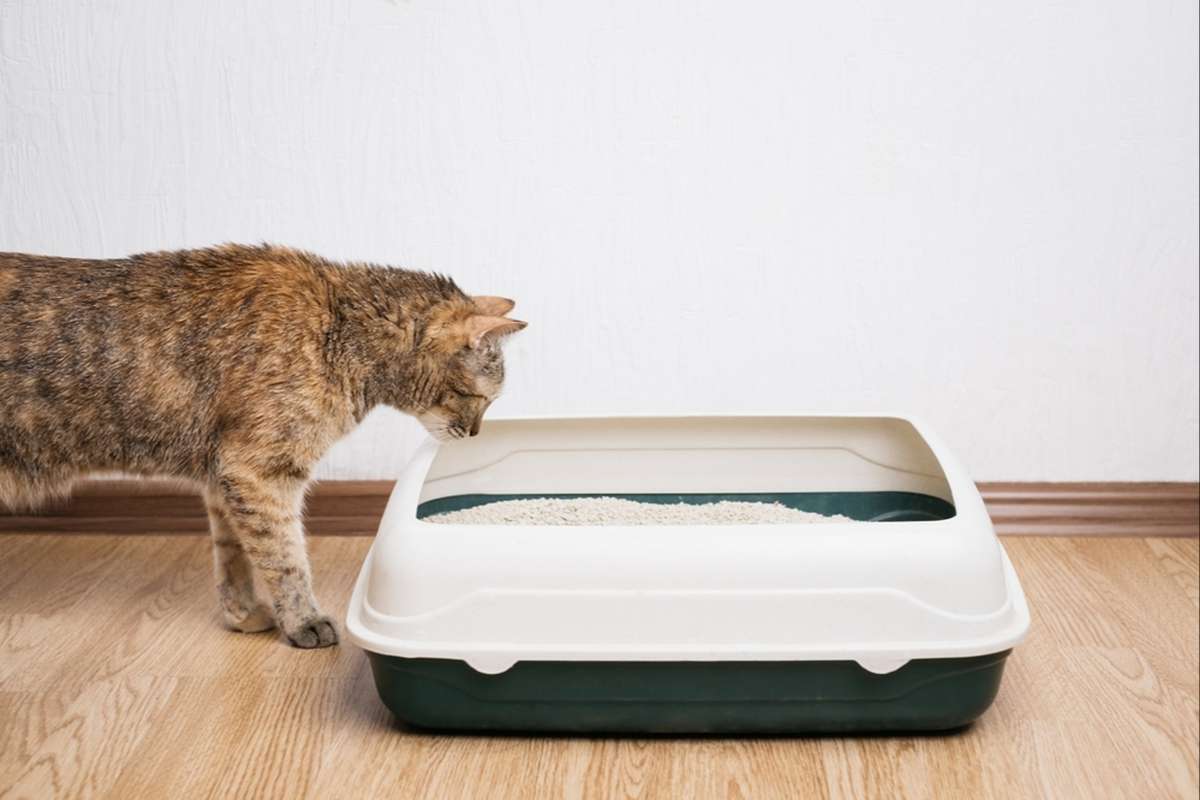
Training a cat to use the litter box is one of the easiest pet care tasks you’ll encounter because cats are naturally hardwired to bury their waste. Most kittens and adult cats will take to a clean, accessible litter box within a few days, often with minimal intervention from you. The key is setting up the right environment with a properly sized box, appealing litter, and a quiet location, then letting your cat’s instincts do most of the work.
If you’ve recently welcomed a new feline friend into your home, you’re probably eager to establish good habits from day one. The wonderful news is that unlike house-training a puppy, litter box training rarely requires weeks of vigilant supervision or complex reward systems. Cats have an innate preference for eliminating in loose, sandy material where they can dig and cover, a behavior passed down from their wild ancestors who used this strategy to hide their scent from predators.
That said, success isn’t completely automatic. You’ll need to choose the right supplies, place the box strategically, and watch for signs that your cat understands where to go. Problems can arise when boxes are too small, litter feels uncomfortable on sensitive paws, or the location feels unsafe to your cat. New adopters sometimes worry when their cat doesn’t use the box immediately, but patience and a few simple adjustments usually solve the issue quickly.
Whether you’re bringing home a confident adult cat or a tiny kitten, understanding what makes a litter box inviting will help you avoid frustration and build a foundation for years of clean, stress-free cohabitation. For more guidance on welcoming your new companion, check out these adoption tips that cover the essentials every new pet parent should know.
Understanding Your Cat’s Natural Instincts
Cats come hardwired with an incredible advantage when it comes to litter box training: they already want to do it. Unlike many other aspects of pet training, you’re not teaching a new behavior from scratch. Instead, you’re providing the right environment for an instinct that goes back thousands of years. In the wild, cats’ burying behavior served a crucial survival purpose. By covering their waste, cats masked their scent from larger predators and avoided alerting prey to their presence. This deeply ingrained instinct means that most cats, when presented with a suitable substrate like litter, will automatically begin digging and covering without any instruction.
Understanding this innate drive should give you confidence as a new cat parent. You’re not fighting against nature or trying to convince your cat to do something unnatural. The litter box works with their biology, not against it.
That said, age and experience do create some variation in how quickly cats adapt. Kittens typically learn from watching their mothers between three and six weeks old, so many arrive at their new homes already knowing what to do. They just need you to show them where the box is located. Adult cats who have used litter boxes before usually transition immediately to a new box in a new home, though they may need a day or two to feel comfortable exploring.
Newly adopted adult cats without prior litter box experience, or those from outdoor environments, might take slightly longer since they’re learning to recognize litter as the appropriate place to go. Even in these cases, the instinct to dig and cover remains strong. With patient guidance and the right setup, most cats make the connection within a few days to a week at most.
What You’ll Need: Tools and Materials
Choosing the Right Litter Box
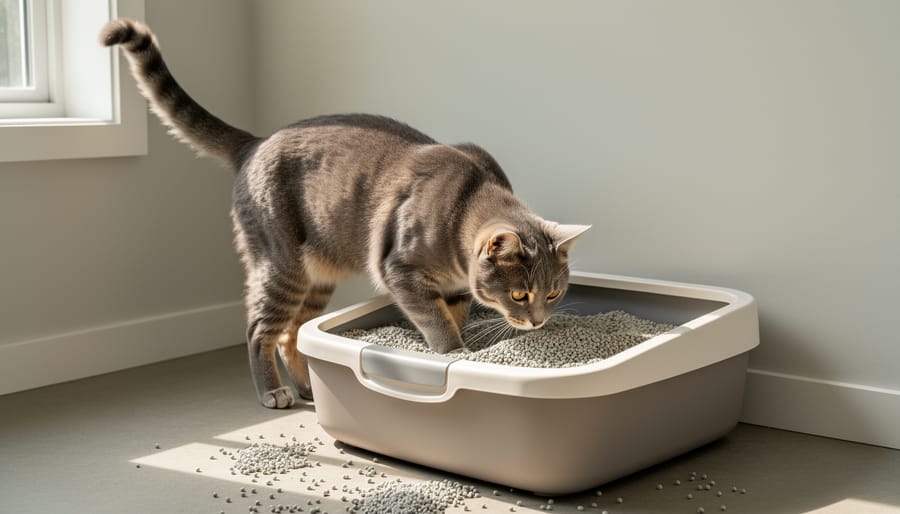
The right litter box makes training significantly easier. Choose a box that’s at least 1.5 times your cat’s length from nose to tail base, giving them room to turn around comfortably. Kittens need shallow sides they can climb over easily, four to five inches maximum, while adult cats benefit from higher walls to contain litter scatter.
Covered versus uncovered boxes sparks debate. Covered versions offer privacy and reduce litter tracking, but some cats feel trapped or dislike the enclosed smell. Start with an uncovered box during training so you can observe your cat’s behavior and ensure they’re comfortable. You can experiment with covers later once they’re reliably using the box.
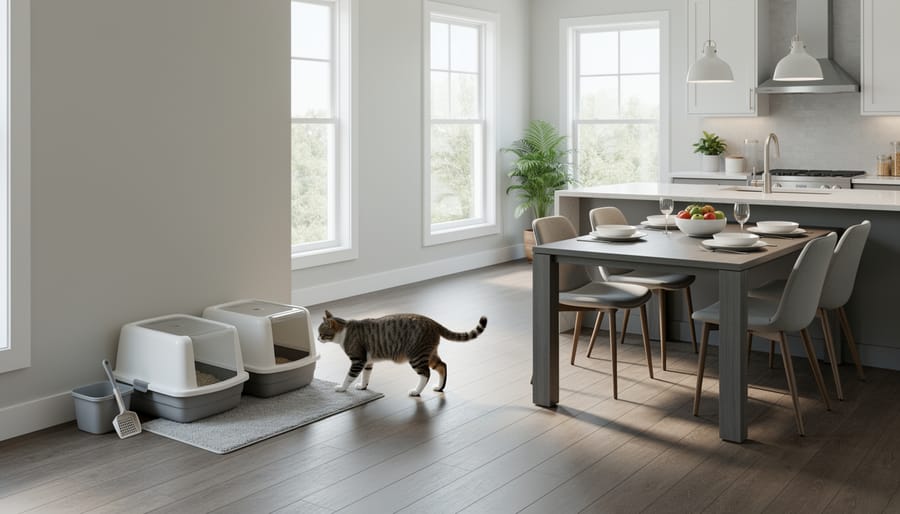
For multiple cats, the golden rule is one box per cat plus one extra. Even in a single-cat home, having two boxes in different locations reduces territorial stress and gives options if one becomes soiled. Place boxes in separate, quiet areas rather than grouping them together, cats view clustered boxes as one territory. This setup prevents accidents and creates a more welcoming bathroom environment for even the fussiest feline.
Selecting Cat-Friendly Litter
Cats have strong preferences when it comes to litter texture and scent, so choosing the right type can make or break your training efforts.
Clumping litter is the most popular choice because it forms solid clumps when wet, making scooping easier and keeping the box fresher longer. Most cats prefer the soft, sand-like texture. Clay-based clumping varieties are affordable and widely available, though they can be dusty.
Non-clumping litter absorbs moisture but doesn’t form clumps, requiring more frequent full changes. It’s typically less expensive upfront but may need replacing every few days. Some cats, especially older ones accustomed to this type, prefer it.
Natural alternatives like pine, wheat, corn, or paper pellets appeal to eco-conscious owners and cats with respiratory sensitivities. These options produce less dust and often control odors naturally. However, the larger pellet texture can feel unfamiliar to some cats initially.
Start with unscented varieties regardless of type. Cats have sensitive noses, and added fragrances that smell pleasant to us can be overwhelming for them. If your cat seems hesitant about a new litter, try mixing small amounts with their current type and gradually transitioning over a week. Watch for signs of preference, consistent use means you’ve found a winner.
Important Safety and Setup Considerations
Before you begin training, you need to set up the litter box environment correctly. Where and how you place the box makes a huge difference in whether your cat will actually use it.
Keep the litter box far away from your cat’s food and water bowls. Cats have a strong instinct not to eliminate near where they eat, so a box placed too close to feeding areas will likely be ignored. Aim for at least several feet of separation, ideally in a different room entirely.
Choose a quiet, low-traffic location that still allows easy access. Bathrooms, laundry rooms, or spare corners work well. Avoid spots near noisy appliances like washing machines or furnaces, which can startle cats mid-use and create negative associations. You want your cat to feel safe and undisturbed when doing their business.
Consider your cat’s physical abilities when positioning the box. Kittens need boxes with low sides they can easily climb into, standard adult boxes may be too tall for tiny legs. Senior cats with arthritis or mobility issues also benefit from low-entry boxes or even boxes with cut-out entrances. If you have a multi-level home, place at least one box on each floor so your cat doesn’t have to navigate stairs in an emergency.
Keep the box accessible but not exposed. While you don’t want it in the middle of your living room, tucking it into a cramped closet or behind furniture can make cats feel trapped or vulnerable. They need to see potential escape routes while they’re in a compromised position.
Check daily that the box remains inviting. Scooping waste promptly and maintaining cleanliness prevents your cat from seeking alternative bathroom spots around your home.
Step-by-Step Training Process
Introducing Your Cat to the Litter Box
Bring your cat into the room where you’ve placed the litter box and set them gently inside. Let them sniff, paw at the litter, and explore at their own pace, there’s no need to demonstrate digging or force their paws into the litter. Most cats instinctively understand what to do. Simply being present nearby offers reassurance without hovering.
If your cat jumps out immediately, that’s fine. Leave the box accessible and try again after their next meal or nap. Kittens especially benefit from frequent, low-pressure introductions since they’re still learning their new environment. For adult cats, particularly those from shelters, patience matters even more, they may need time to adjust to unfamiliar surroundings before feeling comfortable.
Keep the first introduction calm and brief. Your goal is to create positive associations with the box, not to rush results. This gentle approach reflects the same principles behind successful new pet care: meeting animals where they are and letting them set the pace.
Establishing a Routine
Cats thrive on predictability, so gently placing your kitten or newly adopted cat in the litter box at strategic times helps cement the habit. The best moments are right after meals, when they wake from a nap, and following active play sessions, these naturally trigger the urge to eliminate. During the first 90 days with your new cat, stay observant and watch for tell-tale signs: sniffing the floor in circles, scratching at carpet or furniture, meowing insistently, or suddenly darting toward a corner. When you spot these behaviors, calmly carry your cat to the box without fuss. Consistency matters more than rigid scheduling; your goal is to create a reassuring rhythm that aligns with your cat’s natural patterns. Over time, they’ll head to the box independently, and your role shifts from active guidance to quiet support.
Positive Reinforcement Techniques
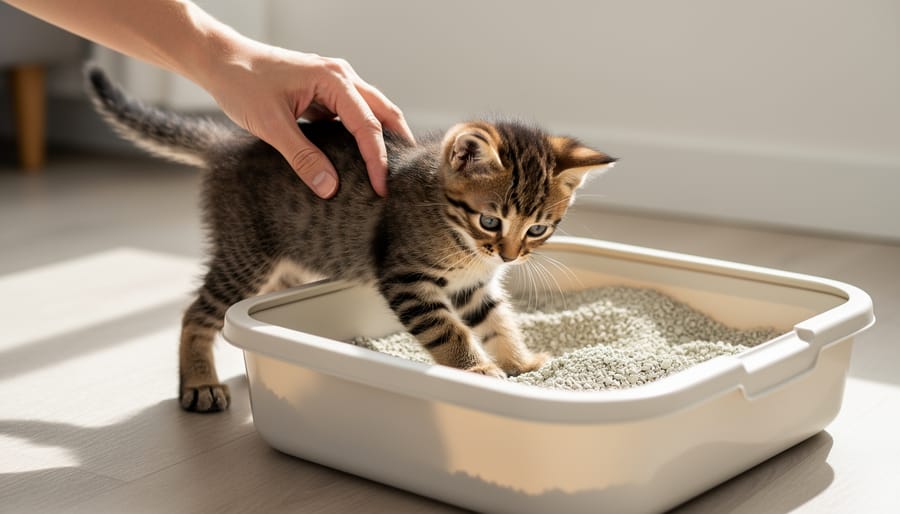
When your cat successfully uses the litter box, a simple, calm acknowledgment works best. Speak softly with a gentle “good job” or offer a brief head scratch if your cat seems receptive. Cats don’t need the exuberant praise that dogs thrive on, and overly enthusiastic reactions can actually startle them or create negative associations with the box.
Treats can work as occasional reinforcement, but timing matters. If you happen to catch your cat finishing up, wait until they’ve stepped out and settled before offering a small reward. Never interrupt them mid-use or hover nearby waiting to pounce with praise.
The truth is, patience outweighs treats every time. Most cats naturally prefer using the litter box once they understand where it is and feel safe accessing it. Your consistent presence, a clean box, and a stress-free environment provide better motivation than any snack. If accidents happen, simply clean up without drama and give your cat time. Training isn’t about perfect execution from day one. It’s about creating conditions where your cat chooses the box because it feels right, not because they’re chasing rewards.
Handling Accidents with Compassion
Accidents are a normal part of the training process, especially with kittens or newly adopted cats adjusting to a new home. When you discover one, stay calm, your cat isn’t misbehaving on purpose and won’t understand scolding or punishment. Negative reactions create fear and stress, which often makes litter box problems worse rather than better.
Clean accidents thoroughly with an enzymatic cleaner specifically designed for pet urine. Regular household cleaners won’t fully eliminate the odor that cats can still detect, which may encourage them to use the same spot again. Blot the area first, then apply the enzymatic cleaner according to package directions and let it work for the recommended time.
After cleaning, observe your cat’s behavior and environment. Frequent accidents might signal the box isn’t clean enough, the location feels unsafe, or a medical issue needs attention. Check that you’re scooping daily and the litter depth is adequate. If accidents continue despite proper cleanup and box maintenance, schedule a veterinary visit to rule out urinary tract infections or other health concerns that can affect elimination habits.
Troubleshooting Common Challenges
When your cat avoids the litter box, it’s natural to feel frustrated, but remember that your cat isn’t being difficult on purpose. Litter box problems almost always have an underlying cause, and with patience and detective work, you can find a solution that works for both of you.
If your cat suddenly refuses to use a box they’ve used successfully before, start by ruling out medical issues. Urinary tract infections, kidney problems, and digestive issues can make elimination painful, causing cats to associate the litter box with discomfort. A quick vet visit can confirm whether health problems are at play.
Once medical causes are ruled out, examine the litter box environment itself. Cats are incredibly sensitive to changes. Did you switch litter brands? Move the box to a new location? Add a covered top? Any of these changes might upset your cat’s routine. Try reverting to the previous setup and making changes gradually, one at a time, so you can identify what your cat prefers.
Cleanliness matters more than most people realize. Scoop boxes at least once daily and do a complete litter change weekly. Some cats refuse boxes that smell even slightly used. If you have multiple cats, the general rule is one box per cat plus one extra, placed in different areas of your home.
Why does my cat pee outside the box but poop inside it?
This often indicates a urinary tract infection or bladder issue causing pain during urination. Your cat may associate the box with that discomfort specifically during peeing. Schedule a vet visit to rule out medical problems.
My previously trained cat started having accidents after we moved. What should I do?
Moving is stressful for cats, and regression is common. Set up litter boxes in quiet, accessible spots in your new home and confine your cat to a smaller area with the box initially. Gradually expand their access as they regain confidence.
Could stress be causing my cat’s litter box problems?
Absolutely. New pets, loud construction, schedule changes, or even rearranged furniture can trigger stress-related elimination issues. Create a calm environment, maintain consistent routines, and consider using feline pheromone diffusers to help your cat feel secure.
Location problems are surprisingly common. Boxes placed near noisy appliances, in high-traffic hallways, or too close to food bowls will deter many cats. Move the box to a quiet, private spot where your cat can relax without interruption.
If your cat consistently eliminates in the same inappropriate spot, thoroughly clean that area with an enzyme-based cleaner designed for pet odors. Regular cleaners won’t remove the scent completely, and lingering smells signal to your cat that this is an acceptable bathroom spot. After cleaning, place a litter box directly over that area temporarily or block access with furniture.
Remember that punishment never works and only damages your bond with your cat. Your cat isn’t misbehaving out of spite. They’re communicating that something feels wrong, and your job is to listen with compassion and problem-solve together.
How to Know Training Is Working: Verification and Next Steps
Most cats show consistent litter box use within just a few days to two weeks, though newly adopted adults or shy kittens may take up to a month to feel completely comfortable. You’ll know training is working when your cat heads to the box on their own without prompting, especially after meals and naps.
Look for these clear signs that your training efforts have paid off:
- Your cat enters the litter box independently when they need to eliminate
- They scratch or dig in the litter before and after using it
- The box shows regular use with buried waste
- Accidents outside the box have stopped completely
- Your cat appears relaxed rather than hesitant around the litter area
Once these behaviors become routine, your focus shifts to maintenance rather than active training. Scoop waste daily and do a complete litter change weekly to keep the box inviting. Cats are remarkably clean animals, and a neglected box is the fastest way to undo successful training.
If your previously trained cat suddenly stops using the box, that’s a red flag requiring attention. Medical issues like urinary tract infections, kidney disease, or digestive problems often show up as litter box avoidance first. Schedule a vet visit before assuming it’s a behavioral problem. Senior cats may need boxes with lower sides as mobility decreases, while stressed cats might need additional boxes in different locations.
Don’t hesitate to contact your veterinarian if accidents persist beyond a month despite consistent training, if you notice blood in urine or stool, or if your cat shows signs of pain while eliminating. Animal behavior specialists can help with complex cases involving anxiety or multi-cat household dynamics. Lincoln Pet Volunteers can also connect you with resources and support as you navigate these challenges, because every cat deserves patient, informed care during their adjustment period.
Litter box training doesn’t have to be complicated. When you approach it with patience and set up the right environment, most cats take to their boxes naturally within days or weeks. You’re not just teaching a behavior, you’re creating a foundation for a clean, harmonious home where your cat feels secure and comfortable.
Every cat deserves that sense of safety, and every new pet parent deserves to feel confident in their ability to provide it. The work you put into proper litter box setup and training is a meaningful part of your pet home commitment one that pays dividends in your cat’s wellbeing and your relationship together.
If you’ve recently adopted from Lincoln Pet Volunteers or you’re considering opening your home to a cat in need, remember that you’re not alone in this journey. We’re here to help adopters navigate these early milestones, from litter box training to feeding routines and beyond. Our team understands that questions and challenges come up, especially in those first weeks, and we’re committed to providing the support and guidance that helps both you and your new companion thrive. Reach out anytime, your success is our mission.