
Spot on dog training means teaching your dog with precision, consistency, and clear communication so behaviors are reliable in any situation, not just when it’s convenient. This approach is especially crucial for rescue dogs who often arrive with anxious habits, trust issues, or gaps in their early socialization. At Lincoln Pet Volunteers, we’ve seen firsthand how precise, compassionate training transforms fearful shelter dogs into confident companions ready for their forever homes.
The philosophy behind spot on training isn’t about perfection or harsh corrections. It’s about setting your dog up for success through clarity. When a dog understands exactly what you’re asking and receives consistent feedback, learning happens faster and sticks longer. For rescue dogs who may have experienced confusion or inconsistency in previous homes, this clarity becomes a lifeline. They learn that certain behaviors always lead to positive outcomes, building the trust and security they need to thrive.
Programs like those offered by Spot On Dogs in Prince Edward Island and New Brunswick, founded by certified behavior specialist Shannon Noonan, demonstrate this principle through specialized services ranging from puppy prep to service dog development. Whether you’re working with a brand-new puppy or helping an adult rescue dog unlearn old patterns, spot on training methods focus on communication that dogs naturally understand. The result? Dogs who respond reliably to cues, handle new situations with confidence, and form stronger bonds with their families. For adopters bringing home a rescue, these skills aren’t luxuries; they’re the foundation for a successful, lasting relationship.
What Makes Training ‘Spot On’

Training methods aren’t one-size-fits-all, and that’s precisely what makes “spot on” approaches so transformative. When we talk about spot-on training, we’re describing a philosophy built on four core pillars: split-second timing in marking desired behaviors, consistent reward-based reinforcement, individualized assessment of each dog’s needs and learning style, and unwavering consistency across handlers and environments.
The difference becomes obvious when you compare it to outdated methods. Traditional training often relied on dominance theory or correction-based approaches that assumed all dogs responded the same way to the same techniques. Spot-on training flips that script entirely. It recognizes that the second you click or say “yes” matters as much as the treat that follows. It understands that a dog rescued from a chaotic background needs different pacing than a confident puppy from a stable home.
- Precise timing: Marking the exact moment a behavior occurs, not a second before or after
- Consistent communication: Using the same cues, gestures, and rewards every time
- Positive reinforcement: Building trust through rewards rather than punishment or dominance
- Individual assessment: Tailoring methods to each dog’s history, triggers, and learning pace
- Environmental awareness: Adjusting training based on distractions, stress levels, and context
Rescue dogs gain the most from this precision because they often carry invisible baggage. A dog who spent weeks in a shelter doesn’t just need to learn “sit.” She needs to rebuild trust in humans, discover that good things happen when she makes eye contact, and learn that the world offers predictability instead of chaos. Generic training programs miss these nuances. They treat anxiety like disobedience, or they push timelines that don’t account for a dog still processing trauma.
Shannon Noonan, founder of Spot On Dogs in Prince Edward Island, puts it into practice through specialized programs ranging from service dog development to everyday companion training. Her approach demonstrates how individualized attention transforms outcomes, whether through daycare-style Puppy Prep School for dogs 14 weeks and under or one-on-one sessions tailored to specific behavioral challenges. That’s what spot-on training delivers: not just obedience, but genuine understanding between dog and handler.
The Perfect Timing: Why ‘Spot On’ Matters for Rescue Dogs
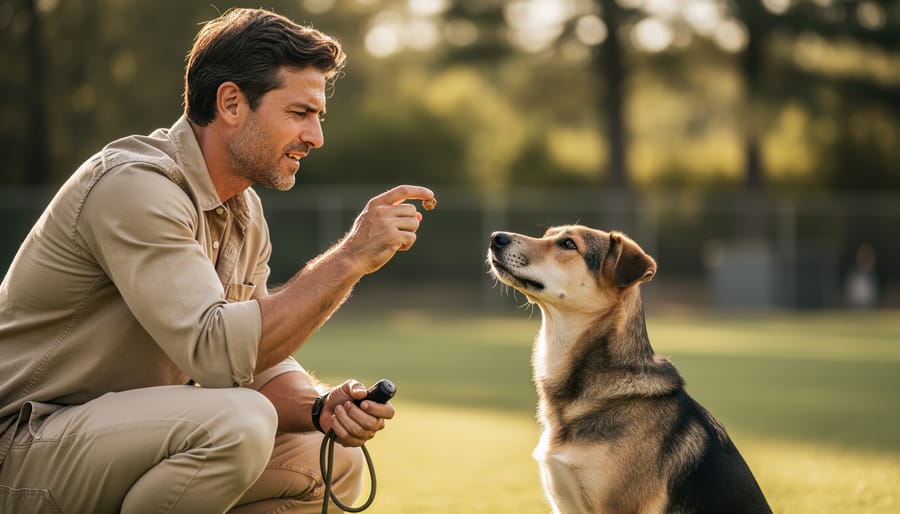
Rescue dogs arrive with chapters already written in their lives, some pages beautiful and others heartbreaking. Without knowing whether a dog spent their early weeks in a loving home or a chaotic environment, trainers and adopters must become expert readers of subtle signals. This unknown history makes precise, compassionate training not just helpful but essential.
The key lies in observation. A tucked tail, pinned-back ears, or a sudden shift in weight distribution tells you everything about how a dog feels in that moment. When you catch the exact instant a nervous dog relaxes their shoulders or makes eye contact, that’s your window. Timing rewards matter because the brain connects the treat or praise to whatever just happened. Wait three seconds too long, and you’ve accidentally reinforced the dog looking away instead of the brave step forward you wanted to encourage.
Building trust with a rescue dog requires reading these body language cues like a conversation. You learn which situations trigger anxiety, which rewards motivate best, and when to push gently versus when to give space. Research consistently shows that trainers should reward immediately after behavior to create clear associations, especially with dogs carrying baggage from their past.
The rescue dog who flinches at raised hands needs someone who can spot the microsecond they choose to stay instead of flee. That millisecond of bravery deserves instant recognition. The dog who resource-guards needs a trainer watching for the first flicker of relaxation near their bowl. These precise moments build new neural pathways, replacing fear-based reactions with positive associations one perfectly-timed reward at a time. For rescue dogs relearning what safety feels like, this spot-on approach becomes the bridge between their uncertain past and a confident future.
Building Foundations: Training Programs That Get It Right
Early Intervention: Puppy-Focused Programs
Starting precise training during puppyhood sets the stage for a lifetime of good behavior and strong human-animal bonds. Programs like the Puppy Prep School at Spot On Dogs, a daycare-style environment for puppies 14 weeks and under, capitalize on the critical socialization window when young dogs are most receptive to new experiences. These early weeks are when puppies learn bite inhibition, appropriate play, and how to navigate their world confidently.
The focused attention and controlled environment of puppy-specific programs prevent common behavioral issues before they take root. Young dogs exposed to varied stimuli in a safe, supervised setting are far less likely to develop fear-based aggression, separation anxiety, or destructive habits later. Rearing a puppy with these foundations means you’re not just teaching commands, you’re shaping a well-adjusted companion who can handle the unexpected with calm confidence. For rescue organizations placing young dogs, this early intervention dramatically improves adoption success rates by giving new families a head start with dogs who’ve already learned essential social skills.
One-on-One Training: When Individual Attention Makes the Difference
Some rescue dogs arrive with invisible wounds, a fear of sudden movements, anxiety around strangers, or a history of neglect that shows up in unpredictable ways. These dogs need more than a group class can offer. When a dog flinches at raised hands, refuses to walk on leash, or displays reactivity toward other animals, one-on-one training becomes essential. Private sessions allow a trainer to tailor every exercise to that specific dog’s triggers and pace, building confidence without the pressure of other dogs or distractions.
In-home training works especially well for dogs with severe anxiety, since the trainer meets the dog in its safe space and gradually introduces real-world scenarios. Facility-based private sessions offer controlled environments to practice skills like loose-leash walking or calm greetings. The key advantage is adaptability. A skilled trainer observes subtle cues, a tucked tail, whale eye, lip licks, and adjusts in real time, ensuring each interaction builds trust rather than fear.
For rescue dogs carrying emotional baggage, this individualized attention isn’t a luxury. It’s the difference between a dog that thrives and one that struggles for years. Private training gives these dogs the patient, expert guidance they need to overcome their past and embrace their future.
How Lincoln Pet Volunteers Applies Spot-On Training Principles
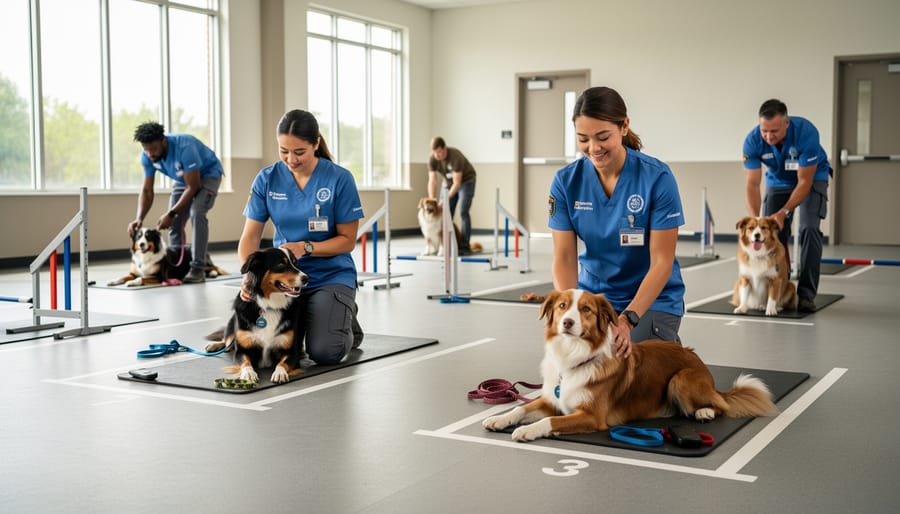
At Lincoln Pet Volunteers, spot-on training isn’t just a philosophy, it’s woven into every interaction with foster dogs. Our dedicated rescue volunteers work closely with each dog, observing body language, identifying triggers, and celebrating small victories with perfectly timed rewards. This individualized approach recognizes that no two rescue dogs arrive with the same background, and cookie-cutter methods simply won’t work.
The transformation stories speak volumes. Bella, a timid shepherd mix who cowered at sudden movements, blossomed through patient, precise training that rewarded her for brave moments, a glance toward a new person, a tentative step forward. Within weeks, she was greeting visitors with a wagging tail. Max, a high-energy terrier mix with jumping issues, learned impulse control through consistent, well-timed positive reinforcement. His adopters report he now sits politely for greetings, a testament to the foundation volunteers built.
Our volunteers receive hands-on guidance in reading canine communication and delivering rewards at exactly the right moment. They learn to recognize the split-second when a nervous dog chooses curiosity over fear, when an excitable pup pauses before reacting. That precision makes all the difference. Volunteers also practice consistency in commands and expectations, ensuring every foster dog experiences clear, compassionate communication that builds confidence.
The results are measurable. Dogs who receive this thoughtful preparation show significantly higher adoption success rates and fewer returns. Adopters frequently comment on how well-adjusted their new companions are, often unaware of the hours volunteers spent building that solid behavioral foundation. By combining individualized attention with proven positive reinforcement techniques, we’re not just training dogs, we’re creating lasting family bonds that begin the moment a frightened pup first trusts a gentle hand.
Getting Started: Spot-On Training Tips for New Adopters
Your rescue dog’s training journey starts the moment you bring them home. While learning how to adopt a dog prepares you for the process, building a strong foundation afterward requires understanding spot-on training principles and applying them with patience.
Begin with these essential steps for establishing your routine:
- Create a quiet space where your dog can decompress for the first 48 hours, limiting training to basic observations of their behavior and comfort level.
- Introduce one simple command at a time, starting with “sit” or their name, keeping sessions under five minutes to prevent overwhelm.
- Mark the exact moment your dog offers the desired behavior with a clicker or verbal marker like “yes,” then deliver the reward within one second.
- Establish a consistent daily schedule for feeding, walks, and short training moments, which helps anxious rescue dogs predict their new routine.
- Practice reading your dog’s body language during every interaction, watching for stress signals like yawning, lip licking, or turning away.
Timing separates effective training from frustrating sessions. The instant your dog sits, touches your hand, or looks at you when called, that’s when the reward must happen. Three seconds later teaches nothing. This precision builds clear communication faster than any other approach.
Consistency matters more than perfection. Use the same word for each command, reward the same behaviors, and involve everyone in your household so your dog receives uniform signals. If “down” means lie down, it can’t also mean get off the couch.
Professional guidance becomes necessary when you notice fear-based aggression, separation anxiety lasting beyond two weeks, or behaviors that don’t improve despite consistent practice. The dog training cost for private sessions often prevents bigger problems down the road, especially with rescue dogs carrying unknown trauma.
Trust develops through hundreds of small, positive moments, not overnight breakthroughs.
Spot-on training isn’t just a method, it’s a philosophy that transforms rescue dogs into confident, trusting companions. By focusing on precise timing, individualized approaches, and compassionate reinforcement, you’re not simply teaching commands. You’re building a language of trust that helps your rescue dog understand their place in a loving home.
Lincoln Pet Volunteers lives this philosophy every day. Through dedicated foster families and volunteers who apply these principles, countless rescue dogs have gone from fearful to flourishing. Whether you’re ready to adopt, have time to volunteer, or want to support our training programs, you’re contributing to this life-changing work.
Every rescue dog deserves the spot-on approach, that perfect combination of patience, precision, and love. When you get the timing right, read your dog’s signals clearly, and celebrate small victories consistently, something remarkable happens. The transformation goes both ways. Your rescue dog learns to trust, and you discover the profound joy of earning that trust one perfectly-timed reward at a time.