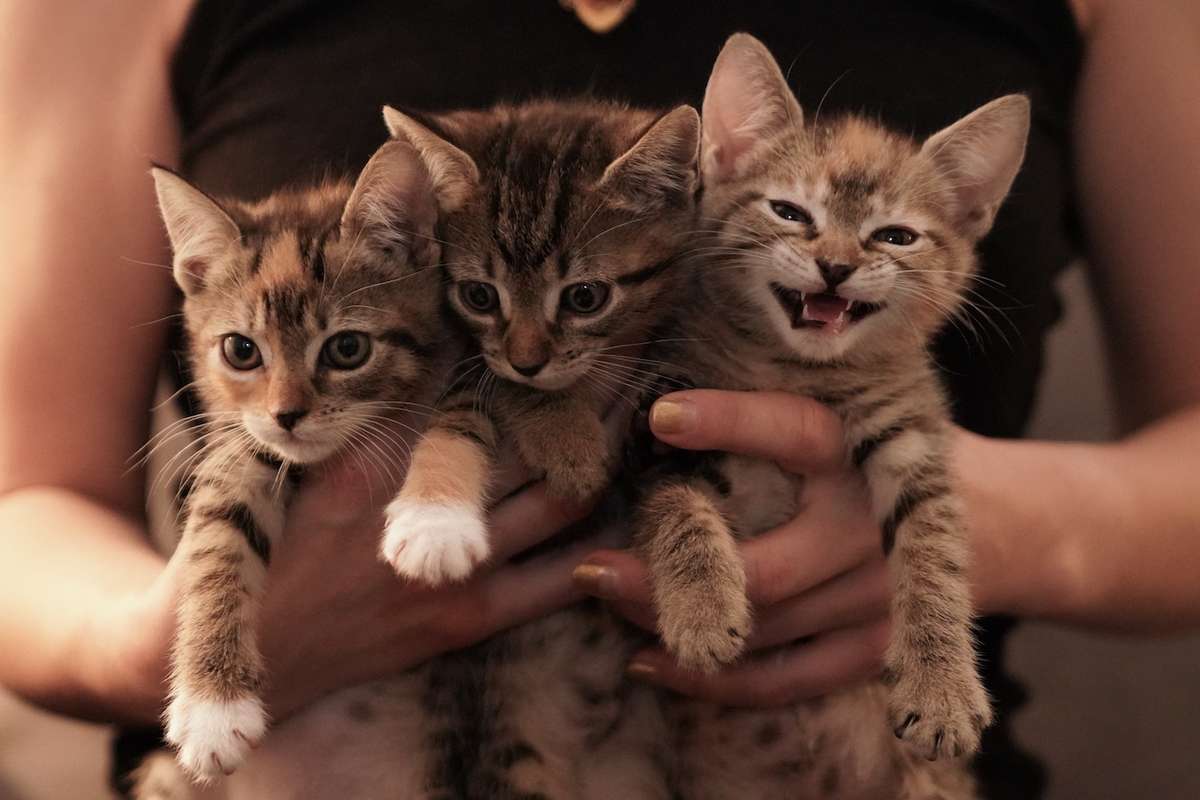
Every day, while most people sleep, Maria arrives at the shelter at 5 AM to bottle-feed abandoned kittens whose eyes haven’t yet opened. Down the hall, James walks fearful dogs who’ve known only cruelty, speaking softly until they learn that human hands can offer gentleness. In the laundry room, Sophie folds her hundredth towel of the morning, knowing each clean blanket means comfort for an animal who desperately needs it.
This is the quiet, transformative work of animal rescue volunteers—the dedicated individuals who form the backbone of every shelter and rescue organization. They’re teachers and retirees, students and business owners, united by a simple truth: animals in crisis need advocates, and they’ve answered that call.
Animal rescue volunteering isn’t glamorous. It’s early mornings and missed weekends. It’s heartbreak when you can’t save them all, and joy so pure it brings tears when you can. It’s the young professional who spends lunch breaks socializing shelter cats, the grandmother who fosters senior dogs nobody else wants, and the teenager who discovers purpose while cleaning kennels.
These volunteers don’t do it for recognition. They do it because somewhere right now, an animal is waiting—waiting for food, for safety, for someone to see their worth. They do it because compassion demands action, and because they understand something profound: in saving animals, we save a piece of our own humanity. Their stories deserve to be told, their commitment deserves to be celebrated, and their example deserves to inspire others to join them.
The Many Faces of Animal Rescue Volunteering
Foster Care Heroes: Opening Homes and Hearts
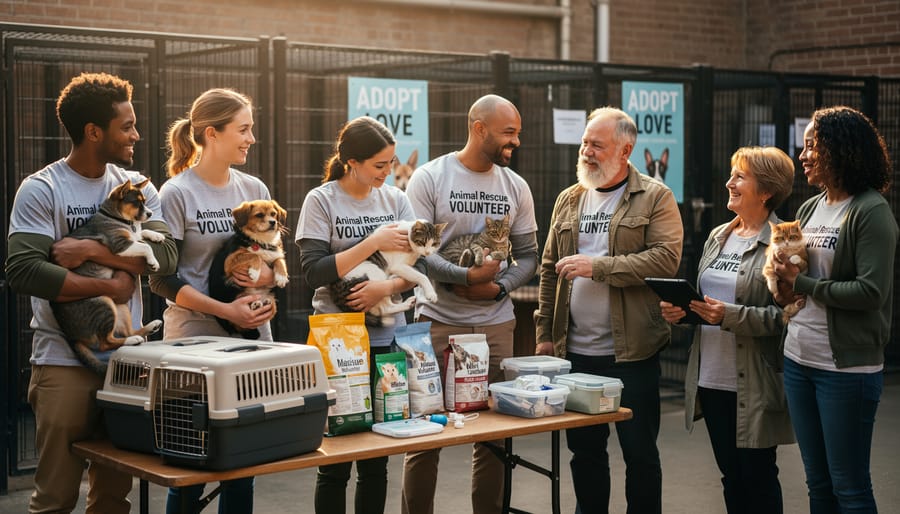
Foster volunteers are the unsung heroes of animal rescue, opening their homes and hearts to animals who need a soft place to land. While shelters provide essential care, there’s simply no substitute for the comfort of a living room couch and the individual attention a foster home provides. Each foster family creates space at the shelter for another life to be saved, making fostering one of the most impactful ways to help animals in need.
The daily life of a foster volunteer varies depending on their temporary houseguest. Puppies and kittens require frequent feedings, potty training, and socialization to prepare them for their forever homes. Adult dogs might need time to decompress from shelter stress and learn basic household manners. Some foster pets are recovering from medical procedures and simply need a quiet place to heal. Foster volunteers provide meals, administer medications when needed, offer plenty of playtime, and shower their charges with the love that helps them blossom.
Take Sarah, who fostered a timid terrier mix named Biscuit. When Biscuit first arrived, he cowered in the corner and refused to make eye contact. Within three weeks of patient care, he was playing fetch and greeting visitors with a wagging tail. Sarah’s dedication transformed Biscuit into an adoptable companion who found his perfect match.
The emotional rewards of fostering run deep. Foster families witness remarkable transformations, from scared shelter animals to confident, loving pets. They receive endless snuggles and entertainment from their temporary companions. Yes, saying goodbye can be bittersweet, but foster volunteers consistently say the joy of knowing they helped save a life far outweighs the temporary heartache. Many fosters describe it as making room in your home to save a life while making room in your heart for infinite love.
Behind-the-Scenes Support That Makes It All Work
While the cuddlers and caregivers often steal the spotlight, animal rescue organizations simply couldn’t function without their dedicated behind-the-scenes volunteers. These unsung heroes keep the lights on, the donations flowing, and the community engaged.
Meet volunteers like Sarah, who spends her evenings crafting social media posts that showcase adoptable pets. Her carefully worded descriptions and perfectly timed photos have helped countless animals find their forever homes. She’s never fostered a dog or cleaned a kennel, but her digital storytelling skills have changed lives just the same.
Then there’s Marcus, whose spreadsheet wizardry keeps track of veterinary appointments, volunteer schedules, and donation records. His organizational talents ensure that no animal misses crucial medical care and that every dollar is accounted for.
Fundraising volunteers like the Johnson family organize bake sales, garage sales, and online campaigns that provide the financial backbone rescue organizations desperately need. Event coordinators plan adoption fairs and community outreach programs that connect animals with potential adopters.
Grant writers research funding opportunities and craft compelling proposals. Graphic designers create eye-catching flyers and promotional materials. Website managers keep adoption listings current and donation platforms running smoothly.
These volunteers prove that you don’t need to be comfortable around animals to make a tremendous difference in their lives. Their contributions in administration, marketing, technology, and finance create the infrastructure that allows rescue work to happen. Every successful adoption story has countless invisible hands behind it, typing, planning, organizing, and advocating from behind computer screens and planning tables.
A Day in the Life: What Volunteering Actually Looks Like
Sarah arrives at the shelter at 7 a.m., greeted by the familiar chorus of barking and the happy dance of dogs who’ve learned her footsteps. Her morning starts with preparing breakfast for thirty residents, each with their own dietary needs and preferences. There’s Max, the senior beagle who needs his medication hidden in peanut butter, and Luna, the shy shepherd mix who’ll only eat if Sarah sits quietly nearby.
“People think it’s all puppy cuddles,” Sarah laughs, scrubbing water bowls. “And don’t get me wrong, there are plenty of those moments. But there’s also a lot of laundry, cleaning, and problem-solving.”
By mid-morning, Sarah’s helping with a transport run. Today they’re picking up three cats from a partnering rural shelter that’s over capacity. The drive gives her time to chat with fellow volunteer Marcus, who shares that his favorite part is seeing animals transform. “Last month, I worked with a dog who wouldn’t make eye contact. Yesterday, she got adopted by a family with kids, and she was giving kisses and wagging her whole body.”
The afternoon brings unexpected joy when Sarah assists with a meet-and-greet. A young couple has been visiting Biscuit, a three-year-old terrier mix, for weeks. Today they’ve brought their application approval and supplies. Watching Biscuit leave with his new family, tail wagging as he looks back one last time, Sarah feels that familiar squeeze in her chest that’s equal parts happiness and bittersweetness.
“This is why we do it,” she says, wiping away a tear.
The day also holds challenges. A new arrival is terrified and reactive, requiring patience and gentle handling. Sarah spends an hour simply sitting near his kennel, reading aloud, letting him adjust to her presence without pressure.
Evening brings the satisfying routine of final feeding and comfort checks. Sarah makes sure every animal has fresh water, a clean space, and a kind word before heading home. Her clothes are covered in fur, she’s physically exhausted, but she’s already looking forward to tomorrow.
“Every single day, you make a difference,” Sarah reflects. “Even when it’s hard, even when progress feels small, you’re giving these animals hope and love when they need it most.”
The Skills You Didn’t Know You Had (And How They Help Animals)
You might be thinking, “I’d love to help rescue animals, but I don’t have any special skills.” Here’s a secret: you absolutely do, and the animals need exactly what you have to offer.
Are you the person who can organize anything? Rescue organizations desperately need volunteers who can manage donation drives, sort supplies, and keep adoption paperwork flowing smoothly. One volunteer we know transformed a chaotic storage room into an efficient system that saved staff hours every week. Her day job? She was a high school teacher who simply applied the same organizational skills she used in her classroom.
Maybe you’re a people person who lights up any room. That warmth translates beautifully to greeting potential adopters, answering phones, or helping nervous families meet their future pets. Your ability to make others feel comfortable helps create those magical adoption moments.
Tech-savvy? Shelters need help managing social media, updating websites, and creating posts that showcase adoptable animals. Your photography hobby could be the reason a shy cat finally catches someone’s eye online.
Even quieter personality traits matter immensely. Patient people excel at socializing fearful animals who need time to trust again. Detail-oriented volunteers catch small changes in an animal’s behavior that might indicate health concerns. Good listeners provide emotional support to fellow volunteers during difficult days.
Think about your everyday skills: Can you drive? You can transport animals to vet appointments. Do you like cleaning? Kennels need that. Enjoy reading? Read to the cats—it soothes them and helps with socialization.
The truth is, rescue work needs the full spectrum of human talents. Your unique combination of skills, experiences, and personality traits makes you valuable in ways you haven’t even imagined yet. The animals don’t need you to be perfect; they just need you to show up as yourself.
How Volunteers Transform Lives—Both Animal and Human
The magic of animal rescue lies in its beautiful symmetry—while volunteers work tirelessly to transform the lives of abandoned and vulnerable animals, something equally profound happens within the volunteers themselves.
Meet Bella, a six-year-old terrier mix who spent eight months in a shelter kennel. Volunteer foster coordinator Maria remembers how timid Bella was, cowering in the corner during her first days. “I started spending extra time with her, just sitting quietly nearby, letting her come to me on her terms,” Maria recalls. Week by week, Bella blossomed. Today, she’s thriving in her forever home with a family who specifically requested a gentle older dog for their children. “Seeing Bella’s transformation from fearful to confident taught me more about patience and trust than any book could,” Maria shares. “She didn’t just find a home—she found herself. And in helping her do that, I found a deeper purpose.”
These reciprocal transformations define rescue work. Volunteer dog walker James, a retired teacher, discovered that his weekly shelter shifts eased the loneliness he felt after his wife passed away. “The dogs needed me, but honestly, I needed them more,” he admits. “Their unconditional enthusiasm every Sunday morning gave me a reason to get up and show up.”
Recent volunteer Sarah found unexpected healing through her work socializing kittens. “I was going through a difficult divorce and felt like I had nothing to give. But those tiny lives depending on me for comfort and care helped me remember my own strength,” she explains. Within six months, she’d helped prepare seventeen kittens for adoption—seventeen families now experiencing the joy of feline companionship.
The emotional rewards extend beyond individual growth. Volunteers consistently describe their rescue community as a second family—people united by shared compassion who celebrate every adoption together and support each other through the heartbreaking losses. This profound sense of belonging, coupled with tangible evidence that their efforts save lives, creates fulfillment that resonates far beyond shelter walls.
Taking Your First Steps as an Animal Rescue Volunteer
Ready to transform your love for animals into meaningful action? Starting your journey as an animal rescue volunteer is easier than you might think, and the rewards are immeasurable.
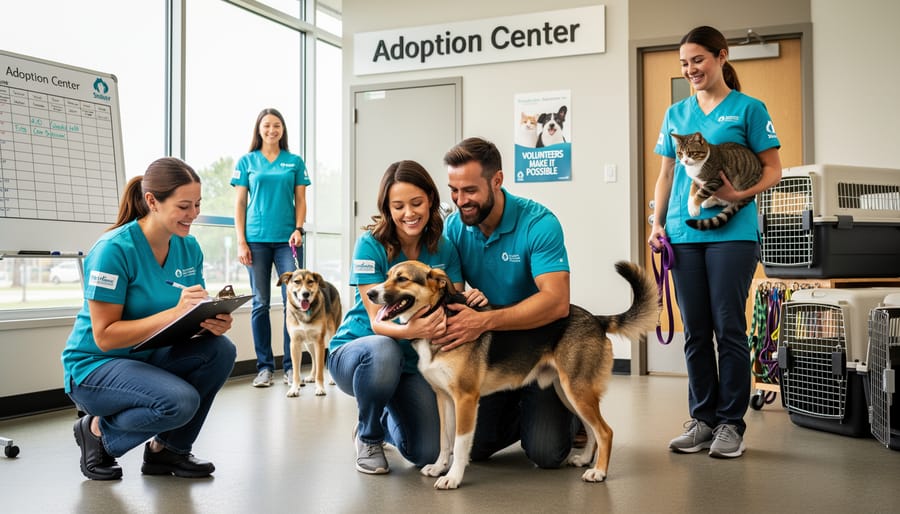
Most organizations begin with a simple orientation session where you’ll learn about their mission, safety protocols, and available opportunities. Don’t worry if you’ve never worked with rescue animals before. These sessions are designed for complete beginners and cover everything from proper handling techniques to understanding animal body language. You’ll likely fill out a volunteer application, provide references, and discuss your interests and availability.
Before your first day, wear comfortable, closed-toe shoes and clothes you don’t mind getting a little dirty. Bring your enthusiasm and an open heart, but leave any expectations of what rescue work “should” look like at the door. Each animal has their own story, and patience is your greatest tool.
Many new volunteers wonder about time commitments. The beautiful truth is that rescue organizations need help in all shapes and sizes. Whether you can offer two hours on Saturday mornings or a full day each week, there’s a place for you. Start small and let your involvement grow naturally as you discover what resonates most with you.
It’s also important to prepare emotionally. You’ll witness resilience that inspires you and situations that tug at your heartstrings. Saying goodbye to foster animals or seeing neglected pets can be challenging, but remember that you’re part of their healing journey. Lean on fellow volunteers who understand these feelings, and celebrate every small victory along the way.
The most common advice from experienced volunteers? Just show up. Your presence makes a difference, and animals don’t judge your experience level. They simply appreciate your kindness and the second chance you’re helping provide.
The heart of animal rescue beats strongest in the hands of volunteers who show up day after day, driven by compassion and the belief that every animal deserves a second chance. These everyday heroes transform the volunteer-powered model from a concept into a living, breathing lifeline for countless animals in need. From the person who walks dogs on Saturday mornings to the foster parent who opens their home to a scared kitten, each contribution creates ripples of change that extend far beyond what we can measure.
Perhaps you’ve felt that pull to make a difference, that gentle nudge when you see a rescue story or meet a volunteer at a local event. That feeling is your invitation to join this incredible community. Whether you have two hours a week or two days a month, whether you’re drawn to hands-on animal care or prefer working behind the scenes, there’s a place for you in animal rescue. Consider starting small by attending an orientation, fostering your first pet, or simply sharing adoption posts on social media. Every single action matters.
The animals are waiting, and so is a community of like-minded people ready to welcome you with open arms. Your journey in animal rescue starts with a simple decision to take that first step.